Judi Dench: "The older you get, the louder you should sing"
Judi Dench talks candidly about growing older, losing her sight, refusing to retire and why laughter and curiosity remain essential to a life well lived.
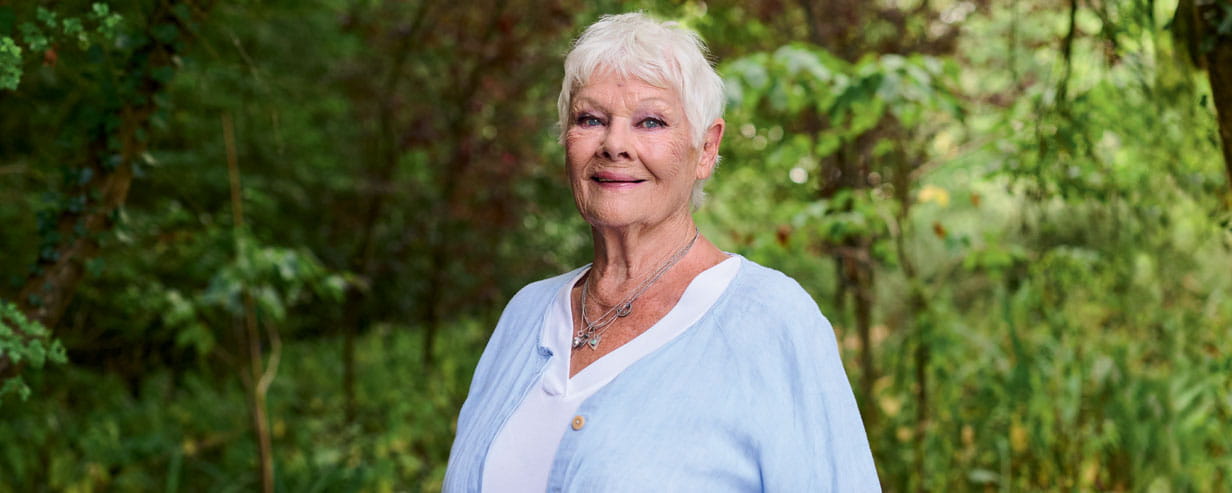
In her warm and witty new memoir Is it Too Late to Make a Run for It?, Judi Dench answers questions from her friend Brendan O’Hea, reflecting on a life in acting, the realities of growing older and why she has no intention of slowing down.
What are the advantages to getting older?
There’s one – they give you a dressing room nearer to the stage. But the thing about getting older is you have to contend with people asking, "When are you going to retire?" or "Isn’t it about time you put your feet up?"
No, it bloody well isn’t. "Retire", "vintage", "old" – let’s banish those words. I want to be like one of those women who throw themselves out of aeroplanes when they’re a hundred. I’m also worried that if I stop I’ll never start again: take the keys out of the ignition and the car will conk out.
So, no...don’t retire, do not go gentle, and don’t even think about going quietly.
The older you get, the louder you should sing – to paraphrase WB Yeats.
What about being called a ‘national treasure’?
Loathe it. Makes me sound like a dusty old relic that’s been stuffed away in the back of the cupboard, along with some dinosaur fossils and a broken Roman shield.
Stephen Fry said that you’re so extraordinary, they ought to put railings around you.
I’d say he’s the extraordinary one. He’s also incredibly tall: I’ve got a very good picture of us together.
Jude, you have to stop asking these tall men to have their photo taken with you. It’s turning into an obsession. You’re in danger of becoming a pest.
You may be right. I’ve got a great one of me with Richard Osman. But I behaved so badly. I was at an event recently and I sidled up to him and said, "May I have my photograph taken, please?" Only then did I realise he was talking to someone and I was so rude – no apology. It turned out to be Alexander Armstrong. I must send him a note. That’s what comes with not being able to see.
Your mother had the same eye condition that you have: macular degeneration. How did she cope with losing her sight?
In the same way that I do, I suppose – by relying on other people and pretending she hadn’t got it. I’m quite good at acting like I can see. But then people think I’m cutting them dead when I don’t recognise them.
I spent five minutes this morning trying to pick up a shiny object off the carpet, only to realise it was a streak of sunlight.
I once popped a Bananagram tile in my mouth thinking it was white chocolate and unwittingly ate the parrot food (which is delicious, by the way). No idea why it says, ‘Not for human consumption’. I bet a parrot insisted on that.
How does your eyesight affect your work?
I’ve had to find a different method of learning lines because even with the script blown up, I struggle. It’s made me realise I have a photographic memory, and so not being able to see the pattern of words on the page makes things really difficult.
Friends help and, provided I’m given enough time, I can somehow muddle through.
You’re very good at remaining positive.
Complaining takes up a lot of energy that you could be using elsewhere.
I tell you what I have noticed – your voice has got lower.
Tonsils, probably. My hearing is also going. Goodness knows what I’m nodding and saying yes to on a daily basis. It’s quite exciting, actually.
When you’re young you don’t mind if you have a twinge in your back. But when you’re older you think, ‘Oh God, here’s something else I’ve got to get used to’. You’re constantly wondering what’s going to pack up next. My teeth are agony.
You’ve been going on about your teeth for years. Didn’t you have trouble with them on Cranford?
I lost a crown during filming. I had to go and see an emergency dentist, and there was no time to change because they needed me back on set as quickly as possible.
I was lying in the dentist’s chair dressed as Miss Matty – full 19th-century gear: the bonnet, the wig – and the dentist said, ‘So, are you busy working at the moment?’ I wanted to say, ‘No, I always go around looking like this.&rsquo
Tell me, are you sleeping any better these days?
I’ve not been a good sleeper since Mikey’s illness. [Judi’s husband of 30 years, actor Michael Williams, died of lung cancer in 2001]. If you go through a long period where the person you’re married to isn’t very well, and you’re lying awake, constantly worried, listening out for any change in the rhythm of their breathing, then I suppose that’s a knock-on effect.
If I can’t sleep, I’ll choose a category and go through the alphabet. So the category might be animals, painters, Shakespeare’s characters… ex-lovers – that’s a good one, although I’m normally asleep by the time I get to the Bs.
In 2020 you became the oldest person to appear on the front cover of Vogue magazine. You were 85.
It was such good fun. I had to stand on a box in a big pink floaty number while they pointed a wind machine at me. I felt like an angel. I’ve vowed never to have another photograph taken unless there’s a wind machine involved.
In recent years you’ve appeared in several dramas where the story revolves around an ensemble of older characters, The Best Exotic Marigold Hotel, Cranford, Esio Trot, all of which became hits. Why do you think that is?
Maybe audiences found it refreshing to see so many older people represented on screen… at the centre of the story. All those films address similar themes: loss, the fear of change. By retiring to India, the characters in Marigold are forced to recalibrate everything they’ve ever known.
The film questions the way we look after the older generation. Maybe places like India have a better approach to ageing, which we could learn from.
After my father died, my mother and Mikey’s parents came to live with us. It wasn’t without its problems, but the positives far outweighed the negatives. Most importantly, Fint [Judi’s daughter Finty Williams] was able to grow up surrounded by her grandparents.
Director John Madden also described Marigold Hotel as a ‘facelift-free film’. Have you ever considered cosmetic surgery?
I would if I could but I’m too squeamish. It was painful enough having Carpe Diem tattooed on my wrist. The BBC film of Roald Dahl’s book Esio Trot is also about embracing change later in life, isn’t it? It works on many levels. It’s actually a study in loneliness and daring to take a risk when you’re older by telling someone that you love them. My character, Mrs Silver, is smitten with her upstairs neighbour, Mr Hoppy – and who wouldn’t be when he’s played by Dustin Hoffman? So she’s always trying to engineer a way of bumping into him. She’s constantly on the go, full of joie de vivre – off to tango lessons, keen to learn new things. ‘Grab joy while you can,’ she says at one point. She’s a character who dances with life.
The same could be said of you, couldn’t it? You’re a perennial child – you still enjoy dressing up and playing games.
Well, you need to keep your mind active. I also try to learn something new every day – a fact, a quote, a Shakespeare sonnet… I recently learnt the word anatidaephobia, which means the irrational fear of being stared at by a duck. Good word, isn’t it? You never know when you might need it.
Have you always enjoyed playing games?
Always – card games, quizzes, puzzles – and also betting. I’ll bet on anything: what time somebody will arrive at the house; what colour clothes they’ll be wearing; whether or not someone will pick up the phone when I ring.
When we made Mrs Brown, Billy [Connolly] and I would place bets on what time that particular day’s filming would finish. He lost a fortune. And if I’m watching University Challenge I’ll bet on which contestant will drink their water first. I told that to Jeremy Paxman – don’t think he was too impressed.
I think laughter is what keeps you young, Jude.
God, can you imagine working with someone who wasn’t prepared to muck about? That’s why I loved working with Billy so much.
Sharing a joke breaks down people’s inhibitions, releases tension. And then you don’t have to act any of the chemistry when it comes to getting up and playing a scene – it’s there already. No, I couldn’t do without laughter. Being around young people – that’s another thing that keeps you spry.
That’s why I love it when Sammie [Judi’s grandson Sam Williams] visits with his friends and I hear them larking about. It’s so uplifting. The older you get, the more it seems to come in a great big rush. But I refuse to be beaten by it. I’m too much in love with life.
Is It Too Late to Make a Run for It? by Judi Dench in collaboration with Brendan O’Hea (Michael Joseph), RRP £25 is out now
Your chance to win a 7-night cruise for two on board the Spirit of the Moselle, worth more than £4,400.
Treat someone special to a Saga Magazine subscription – 12 inspiring issues for just £34.95. Plus, you will also enjoy three free gifts: a cotton tote bag, a bumper puzzle book and a box of Guylian Seashell chocolates.
Every issue is packed with real-life stories, exclusive celebrity interviews, insightful articles and practical tips on health, finance, travel, and more. A thoughtful gift that entertains all year round.
The TV designer on the daily meeting that is the key to living happily with his children and grandchildren.
The radio DJ, 74, on leaving the BBC, continuing his PopMaster quizzes and the joy of the daytime party.
The actors talk ageing, James Bond, the powerful message of the film and why author Richard Osman felt nervous about coming on set.
The clothing designer says it’s time to embrace thrift and shares his tips on how we can dress well for less.
DJ and presenter Jo Whiley on how she's still getting home at 4am and why she thinks Monty Don is as cool as Mick Jagger.
Former finalist Debbie McGee reveals what happens behind the scenes at TV’s most glamorous show.
Stop smoking, go for a walk and do puzzles, says the veteran newsreader.
The author and actor talks about her starring role in the Thursday Murder Club film.
Rock and roll's true survivor - Chris Rea on family, fame and what his battle with cancer has taught him.