There are worse ways to spend a working afternoon than eating ice cream.
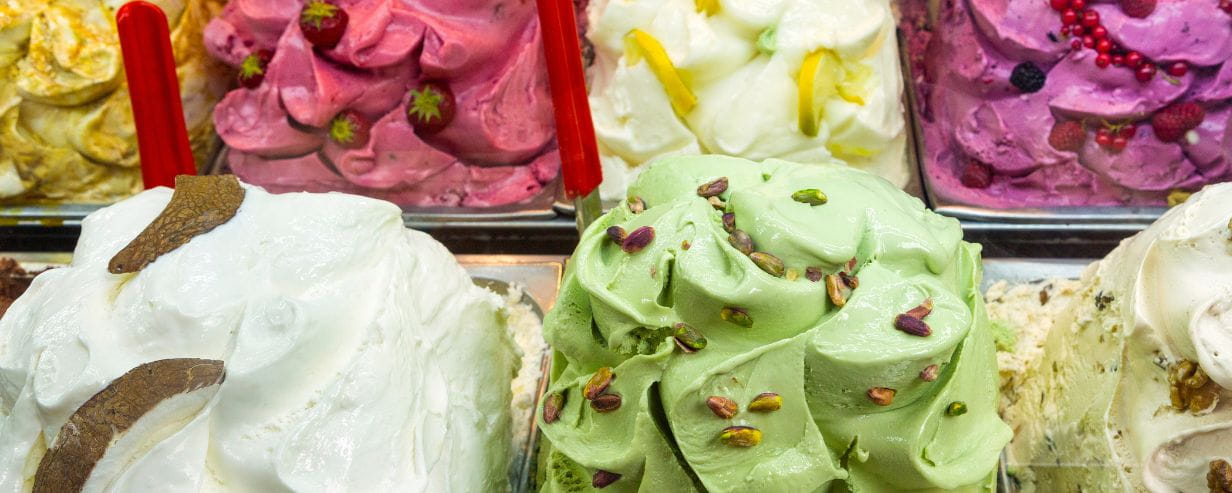
Admittedly, the particular ice cream in front of me was paper-flavoured, which, it turns out, tastes exactly as peculiar as it sounds, and made the whole thing feel less like a treat and more like an admin task gone rogue. Still, there I was, spoon in hand, eating dessert in the name of journalism and wondering whether I had finally found the health story I was born to write.
Because ice cream is not usually what springs to mind when we talk about healthy ageing. We’re more used to being told to count steps, track sleep, cut sugar, monitor our heart rate and eat something beige but virtuous with seeds in it.
Could something this enjoyable really be part of a healthy life?
Dr Ezekiel J Emanuel thinks so. The Harvard-trained oncologist, health-policy expert and author of Eat Your Ice Cream: Six Simple Rules for a Long and Healthy Life, has written a book that pushes back against the joyless side of modern wellness.
“The whole book is about stopping obsessed, stopping crazy,” he explains. “Stop tracking everything. You’re going to have to do wellness for years and decades. You have to make it a habit. And you don’t have to be perfect.”
As Dr Emanuel puts it: “This isn’t an Olympic gymnastics event. This is living life.”
Dr Emanuel didn’t choose ice cream just because it makes a good title, although it certainly does. He points to research from Harvard in the early 2010s that looked at dairy consumption and the risk of developing Type 2 diabetes.
“They have been tracking healthcare providers, nurses and doctors for decades, following their diet and then following heart disease and cancer and lots of other things,” he says. “In 2014, they published this article about dairy and Type 2 diabetes.”
The surprising part, he says, was what happened when you looked beyond the abstract.
“If you read the abstract, it’s a fascinating story,” he says. “They talk about yogurt, but say nothing about ice cream, and then if you go read the whole paper and look at the chart, turns out ice cream is the dairy product that actually decreases the risk of Type 2 diabetes the most.”
That does not mean a tub of cookie dough becomes a prescription item. It also does not mean ice cream directly causes better health. This was observational research, which can spot associations but cannot prove that one thing causes another.
Dr Emanuel is also clear that not all ice cream is equal.
“There are lots of ice creams where it’s really just cream and eggs and sugar and flavouring,” he says. “You don’t want the stuff that’s got the emulsifiers, the polysorbate 80s and preservatives and all of that. That’s not good for you.”
His advice is not exactly wild, once you get past the dessert-based headline.
“You should probably eat a little less ice cream,” he says, “but eat the high-quality stuff.”
His bigger argument is not that we should all start mainlining mint choc chip in the name of longevity. It is that wellness has become far too complicated. Dr Emanuel wrote his book, he says, “to counteract the extreme movement”.
“I think the extreme movement has the wrong philosophy of life,” he says. “Part of their philosophy of life is health and wellness. First of all, you should obsess about health and wellness, but that’s mistaken. Second of all, deprivation is the way to health. That’s wrong.”
It's a relief to hear a doctor say this, because so much modern health advice seems to start from the assumption that pleasure is suspicious. Don’t eat this. Don’t drink that. Wake up earlier. Sleep longer. Walk more. Lift heavier. Track better. Be a more impressive version of yourself, preferably before breakfast. The trouble, says Dr Emanuel, is that most of us cannot keep that up.
“You don’t have enough willpower to deprive yourself for that,” he says. “If you’re 50, you’re going to live another 30, 35, 40 years. That’s a very long time to be depriving yourself and exercising your willpower.”
He talks about willpower fatigue: the more effort you spend telling yourself you must not eat this, do that or enjoy the other, the less likely you are to keep going.
“The more you force ‘I shouldn’t eat, I shouldn’t do this, I shouldn’t do that,’ the less likely you are to actually adhere to it,” he says. “That’s why diets that require people to forgo lots of things fail.”
It is also why New Year’s resolutions so often don’t make it to spring.
“By the end of February, 80% of them are dead,” he says. “Because they require willpower and willpower is easily fatigued.”
The problem is not wanting to be healthy. It is turning health into another thing to fail at. As Dr Emanuel puts it: “I’m obsessing about obsessing instead of living a full, rich life. Health is just part of that.”
This, for me, was the most refreshing part of the conversation. Ask most wellness experts for their top health tip and you expect protein, Pilates or perhaps something involving chia seeds.
Dr Emanuel says: invite people over.
“When people ask me what’s the number one thing they can do for their wellness, they’re shocked when I say: have a dinner party,” he says.
“Social connection is the number one activity for wellness,” he says. “All these wellness influencers on TikTok and Instagram, they focus on exercise and diet and sleep. They never say anything about social relationships. But if you look at the data, social relationships are far and away the most important thing.”
His ideal prescription is simple. Cook something good. Try a new recipe, so your brain has to work a little. Invite people you actually want to talk to. Have a proper conversation. If you go for a walk afterwards, even better.
“I call it a wellness trifecta,” he explains. “It’s got good food. It’s got social interaction. It’s got mental challenge. And if you go out for a walk after your dinner, you’ve got exercise, so you’re done.”
It reminded me of my weekly dance class, where everyone is mostly my age (over 50), has to concentrate, nobody can take themselves too seriously and there is an invite for a cuppa afterwards.
Dr Emanuel approves.
“Dancing is one of those things,” he says. “You get your heart rate up, you get your breathing up. It requires coordination, requires balance. So from the exercise standpoint, it’s fantastic. And then, as you point out, it’s also the social activity.”
Which, frankly, sounds a lot more appealing than treating health as another thing to monitor, measure and feel vaguely guilty about.
His words, not mine. The point is simple: avoid unnecessary, self-destructive risks.
That might mean drinking too much, driving while distracted, taking silly chances or ignoring the preventable things that can cut life short.
Social connection is not a soft extra. Dr Emanuel argues it is central to living well.
“We’ve gone way too far into the loneliness, socially isolated part, and not enough into social relationships,” he says.
Keep learning. Stay curious. Read, cook something new, take up a hobby, join a group or challenge yourself in a way that feels interesting rather than punishing.
Your brain likes a bit of work.
This is the rule that tends to make people sit up. Dr Emanuel is not suggesting we live on pudding, but he is saying that a healthy life has room for pleasure.
“Eating a piece of cheesecake once every few months is not going to take a minute, much less a week or a month off my life,” he says. “One has to be rational about that.”
Exercise still matters, of course, but it does not have to be extreme. “It’s very, very important to establish a habit,” he says. “Whether it’s walking with a friend, again throw in the social thing, or riding a bicycle.”
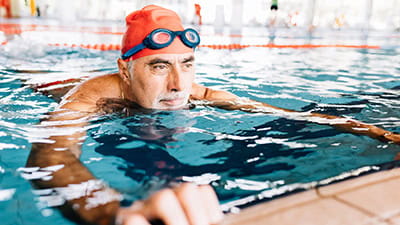
Walking, cycling, swimming, dancing – it all beats sitting there feeling guilty.
Good sleep underpins everything else. Not in a panicked, app-monitored, “why am I not asleep yet?” way, but as a steady habit that helps your body and mind function properly.
Probably not more, but perhaps better quality and definitely with less guilt.
Dr Emanuel is not interested in living longer at any cost. In fact, he is deeply sceptical of the idea that we should all be chasing more and more years as if there is a prize at the end.
“All this promise, ‘Oh, we’re going to live to 150, we’re going to live to 200’,” he says. “I think it’s crazy.”
He is more interested in what those years are actually like.
“You ask people, is it quality of life or quantity of life you really want?” he says. “Oh, it’s quality. Well, live for the quality. That’s not the obsession about quantity.”
That feels like the point. Most of us don’t want a life so optimised that there is no room left to enjoy it. We want to feel well enough to walk, dance, travel, laugh, cook, see friends and, every now and then, eat something simply because it tastes good.
As Dr Emanuel says, the important things in life are “helping others, loving our family, loving our friends, making a contribution to our community”.
As for my paper-flavoured ice cream, I’m still not entirely convinced paper needed to be a flavour, but as a reminder that health does not have to mean joyless self-denial, it did the job rather nicely.
Eat Your Ice Cream by Dr Ezekiel J Emanuel (Ebury)
Jayne cut her online journalism teeth 25 years ago in an era when a dialling tone and slow page load were standard. During this time, she’s written about a variety of subjects and is just at home road-testing TVs as she is interviewing TV stars.
A diverse career has seen Jayne launch websites for popular magazines, collaborate with top brands, write regularly for major publications including Woman&Home, Yahoo! and The Daily Telegraph, create a podcast, and also write a tech column for Women’s Own.
Health insurance for people over 50 that provides a quicker route to diagnosis and planned medical treatment in a private facility.
Underwritten by Bupa Insurance Limited.
Click below for your chance to win a 15-night cruise to the Canary Islands on board Saga's Spirit of Adventure, worth more than £8,300.
Expert nutritionists break down the most important foods to eat in each decade as we get older.
We reveal the 7 best tinned foods to supercharge your health while saving you time and money.
From ketchup to mayo – how healthy are your sauces? We find out the pitfalls and surprising benefits of our favourite condiments.
Could honey be the sweetest way to supercharge your health this year? Our experts explain the benefits and which to buy.
Our expert guide to the common foods you shouldn't mix with prescription drugs.
Experts reveal whether chilled supermarket soups are worth the extra cost and if some flavours are better for you than others.
Looking after your gut health could be one of the biggest things that you can do for your overall health. Here are the best foods to keep your gut happy.
The foods that could help you live longer and protect against chronic illness.
A dietician reveals which foods can help protect vision and prevent age-related eye conditions.
Everything you need to know about protein, from how it benefits your body to the best high-protein foods – and how much you really need.