Paul Lewis: you may be entitled to unclaimed benefits, credits or savings
Our money expert says there are billions of pounds in unclaimed benefits and reductions that could make a big difference to your life.

Our money expert says there are billions of pounds in unclaimed benefits and reductions that could make a big difference to your life.
Last month, this column helped you pay less in tax and even get money back from HMRC.
This month, we take a look at some of the relatively easy ways that you can boost your regular income while also cutting your day-to-day expenses.
So, let me start by offering you £114.60 a week – nearly £6,000 a year – tax-free for life. It is not means-tested, so whatever your income or savings, you can still get it.
It’s called Attendance Allowance, and I mention it first because an estimate by research group Policy in Practice reckoned that, in the UK, more than a million pensioners could claim it but don’t.
Almost two million who already get it find the extra money a great help. Are you in the missing million?
If not, maybe a relative, a friend or a neighbour is?
As we get older, our body and brain wear out. They get slower, stiffer, more reluctant. Of course, it is the last thing we want to admit, but there comes a time when we need help to be safe and to look after ourselves.
Attendance Allowance kicks in when that process amounts to a long-term physical or mental condition, and you need help from someone else to do day-to-day but essential things – like getting up, washing, dressing, preparing meals, eating, using the toilet, going out or being safe at night.
If you need help or supervision with any of those, you might be eligible. The help could be from a partner, a friend, a relative or a professional carer.
And you don't actually need to get the help to be eligible – just needing it is enough.
There are two rates, and they both rise from April. If you need help both day and night, you can claim £114.60 a week. If you just need help in the day or at night, you can claim £76.70 a week.
It's money to recognise the problems of getting older. And remember, it's not means-tested – even King Charles could get it if he qualified.
There is £1.6 billion waiting for another 760,000 people over pension age who do not get the extra income they could.
Pension credit tops up your income to what the Government thinks you need. It is paid at different rates to people who qualified for the state pension before 6 April 2016, and those who qualified after that.
At its simplest, it tops up your income to £238 a week (or £363.25 for a couple both over state pension age), with older pensioners able to get up to an extra £17.96 a week (£20.10 for a couple) if they have other income.
If you get Attendance Allowance or something similar, add £86.05 a week to the amount it tops you up to, and for carers add £48.15. If you have savings of more than £10,000, then you may get less.
Another £1 billion is waiting to help pensioners who are tenants with their rent. And possibly the same again in unclaimed council tax reductions.
Speak to your council about housing benefit for pensioners, and council tax reductions. They are there for the asking.

I expect you are claiming state pension. This month it will go up, and again it is a two-tier rise.
The basic old state pension will rise by £8.45 to £184.90 a week, while the standard new state pension will increase by £11.05 to £241.30 a week.
That is a rise of 4.8%, but any extras paid on top, such as SERPS, protected payments and extra for deferring, only rise by 3.8%. So, overall, your pension rise will be between those two percentages.
The increase will start in the week of 6 April, but you won’t see the extra until your next payday.
Energy bills are falling from 1 April. The regulator Ofgem claims that it's a 7% fall for the typical customer, but the reduction you'll see in the cost of electricity and gas depends on how much you use and where you live.
However, if you are one of the eight million customers who pay their bill as it arrives each quarter, there is one sure way to save money: change your payment to direct debit or prepayment.
Your standing charge will be cut, and your rate per unit will be less. Guaranteed. A typical user will save nearly £11 a month by shifting to direct debit, and £14.50 a month by moving to a prepayment meter (though that comes with a lot of hassle). Either way, it's cheaper than paying quarterly. Prices and the rules are different in Northern Ireland.
If you are struggling to pay your electricity or gas bill, your supplier must work with you to agree a payment plan you can afford.
You can ask for a reduction in payments, a payment break, more time to pay or money from a hardship fund. Just call them. And the same is true of utilities like water and even telecoms.
More than two million households receive help with water bills. And telecoms providers offer reduced ‘social tariffs’ to people on low incomes.
Of course, all these schemes depend on you asking for help. There are literally billions of pounds waiting to be claimed.
After a lifetime of work and paying into society, older people should feel no guilt or shame in taking something back.
Please, put a spring in your step this April!
For info and help with claims:
[Hero image credit: Eliot Wyatt]



Enjoy the freedom to withdraw your savings at any time.

The ultimate guide to Saga Puzzles, full of technical tips, tricks and hints.
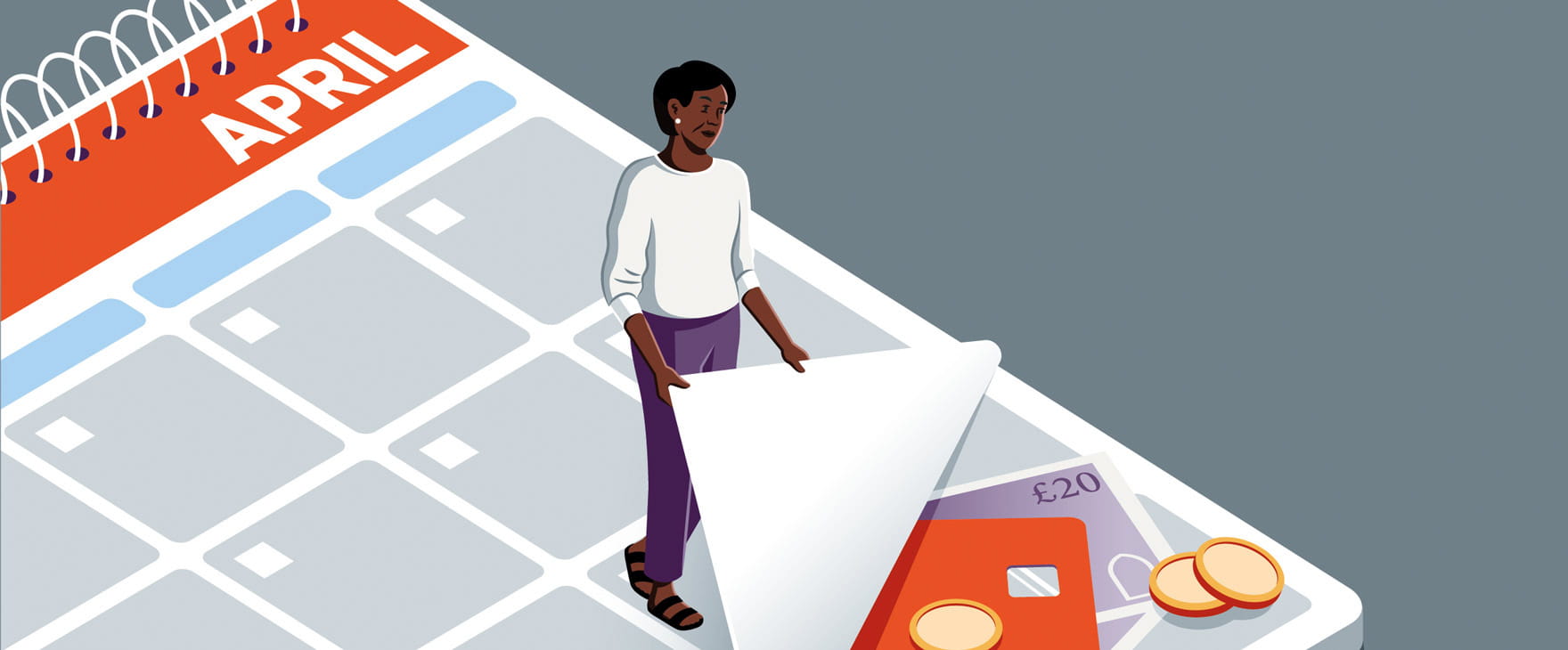
With the start of the new financial year on 6 April, our money expert explains the changes to your pension, benefits and taxes.