Susie Dent reveals the people behind our familiar words
Did you know sideburns, wellies and even the guillotine were named after real people? Our resident etymologist shares their true stories.

I’ve never been a voracious reader of biographies. Steeped as I am in the real world for my job, I tend to opt for the escapism of a good novel or short story before bed. But this week, while anagramming on Countdown, the beautiful word ‘lodestar’ came up, which I knew straight away to be an anagram of ‘leotards’. Any long-time watcher of the show will know that this word was a personal favourite of the original host, Richard Whiteley. He loved it not for the team’s teasing that one day he should turn up in one (complete with one of his colourful ties), but because of its story.
He never tired of telling us that the garment was named after Jules Léotard, a French trapeze artist of the 1860s, who performed in a snug one-piece knit that gymnasts still wear in his name. In that moment I was reminded that I actually read biographies every day, in the form of the words I love to chart.
‘Leotard’ is an example of an eponym, a term for something named after a person. Everyday language is peppered with them. Take the humble mackintosh or the sumptuous pavlova, a cup of Earl Grey tea or a pair of colourful wellies.
Look around your garden and you’ll find footprints everywhere, from Michel Bégon (a patron of botany after whom the begonia was named) to Anders Dahl (immortalised in the dahlia), and on to Pierre Magnol (the magnolia), Leonhart Fuchs (fuchsia), Joel Poinsett (poinsettia), and Caspar Wistar (wisteria).
Other words were inspired by figures from the distant past: they include ‘mentor’, ‘stentorian’, ‘draconian’, and ‘pyrrhic’, all named after real or mythological characters that loomed large in the ancient imagination. Some eponyms proved more welcome than others. The 18th-century French doctor Joseph-Ignace Guillotin opposed the death penalty and fought against the primitive means by which criminals and alleged traitors were executed. If the state insisted on killing, he argued, it should do so humanely and without regard to rank. He is said to have been deeply distressed that the execution device (actually created by another French physician, Antoine Louis) that became synonymous with the French Revolution was given his name: the guillotine.
Thomas Bowdler didn’t quite deserve his legacy either. In 1818 he put his name to The Family Shakespeare, an edition of the Bard’s works that was ruthlessly stripped of every word ‘which cannot with propriety be read aloud in a family’. It was thanks to him that the verb ‘to bowdlerise’ was born, meaning to censor a text by purging its indecent parts. In reality, it was Bowdler’s sister Henrietta who did most of the expurgating, but a woman could hardly confess to reading the ‘offensive’ passages herself, and so her brother took the rap.
Others happily accepted their immortality. The Belgian Adolphe Sax patented his instrument in 1846 and gladly called it the saxophone. The same goes for Rudolf Diesel and Earl Tupper (to whom we can give thanks for Tupperware).
I have two favourites. The first is the word ‘sideburns’, a tribute to the American general Ambrose Burnside, whose extravagant cheek whiskers were first called ‘burnsides’ until the word’s two halves swapped places.
The second has to be ‘maverick’, used of someone who refuses to follow the herd. Here we have to thank Samuel Maverick, a Texan who declined to brand his cattle so that every unmarked stray on his neighbours’ land became known simply as another ‘maverick’. Incidentally, it was Maverick’s grandson who invented the word ‘gobbledygook’, but that’s another story.
The next time you fancy reading up on the people who have shaped our lives, you could do far worse than simply pick up a dictionary. If you want to do that in a leotard, so much the better.
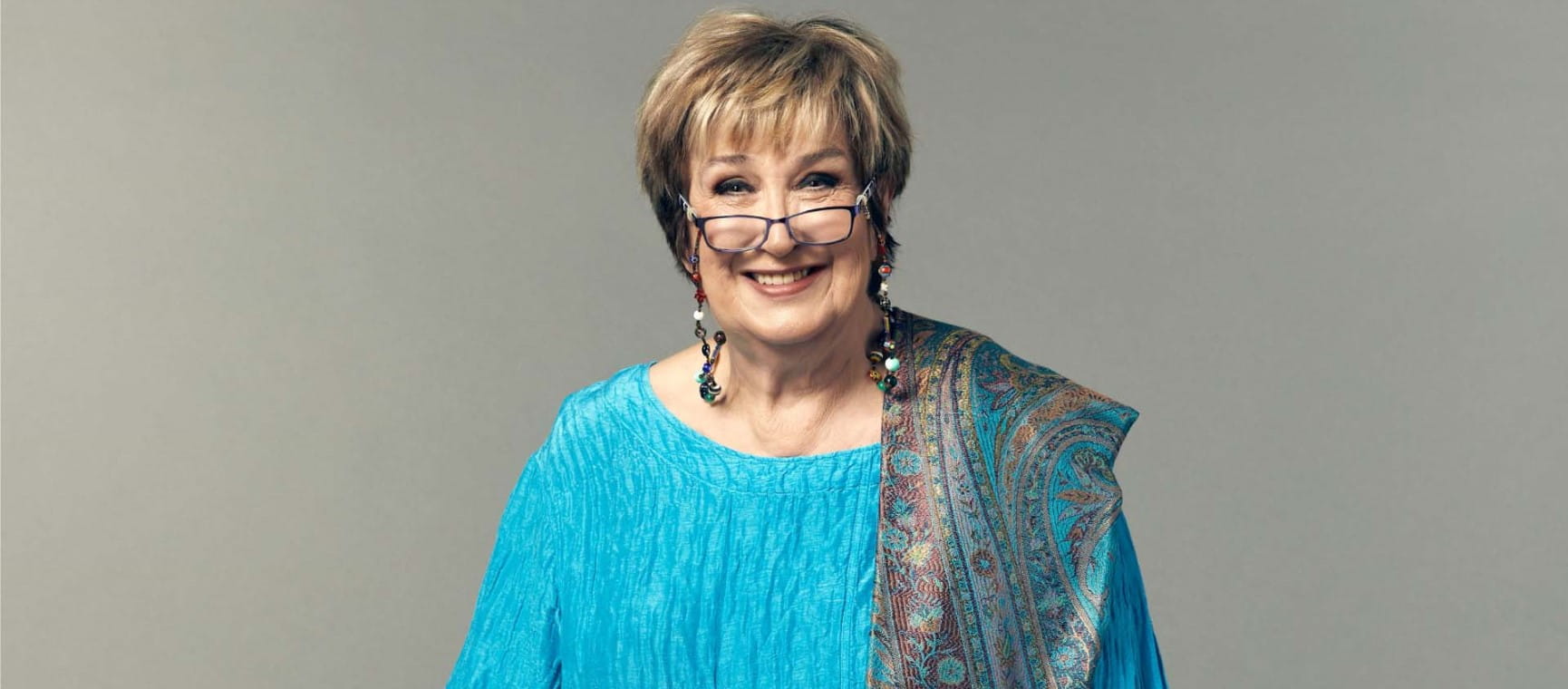
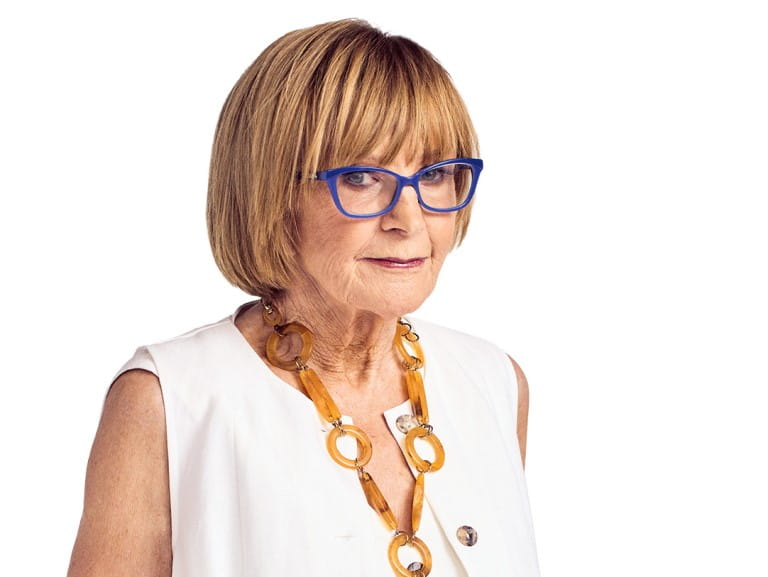
Susie Dent is a lexicographer, best-selling author, broadcaster and Saga Magazine columnist.
Try something different – a new style of accommodation, unbeatable locations and peak season at great prices.
These are a great alternative to traditional hotel breaks with our nationwide chauffeur service included.
Plus, you can save £100 per person for a limited time only. T&Cs apply.
This year, Saga is celebrating an incredible 75 years – and we’d love you to be part of the celebrations. For a limited time only, you can subscribe to Saga Magazine for just 75p an issue.
Receive the next 6 print editions delivered direct to your door, plus 6 months’ unlimited access to the Saga Magazine app – perfect for reading on the go.
Anne Robinson helps a man who thinks his life doesn't feel important after retirement, and asks how to find purpose again.
Dr Miriam Stoppard advises a widow on how to navigate modern dating etiquette and broaching the subject with her grown-up children.
As a growing movement tries to address the fact that one in five men say they have no close friends, we explore the roots of male loneliness and find out what we can all do to help.