Follow in David Attenborough’s footsteps: wildlife holidays that bring his world to life
As Sir David Attenborough reaches his 100th year, we explore two Saga holidays that capture the spirit of his life’s work.
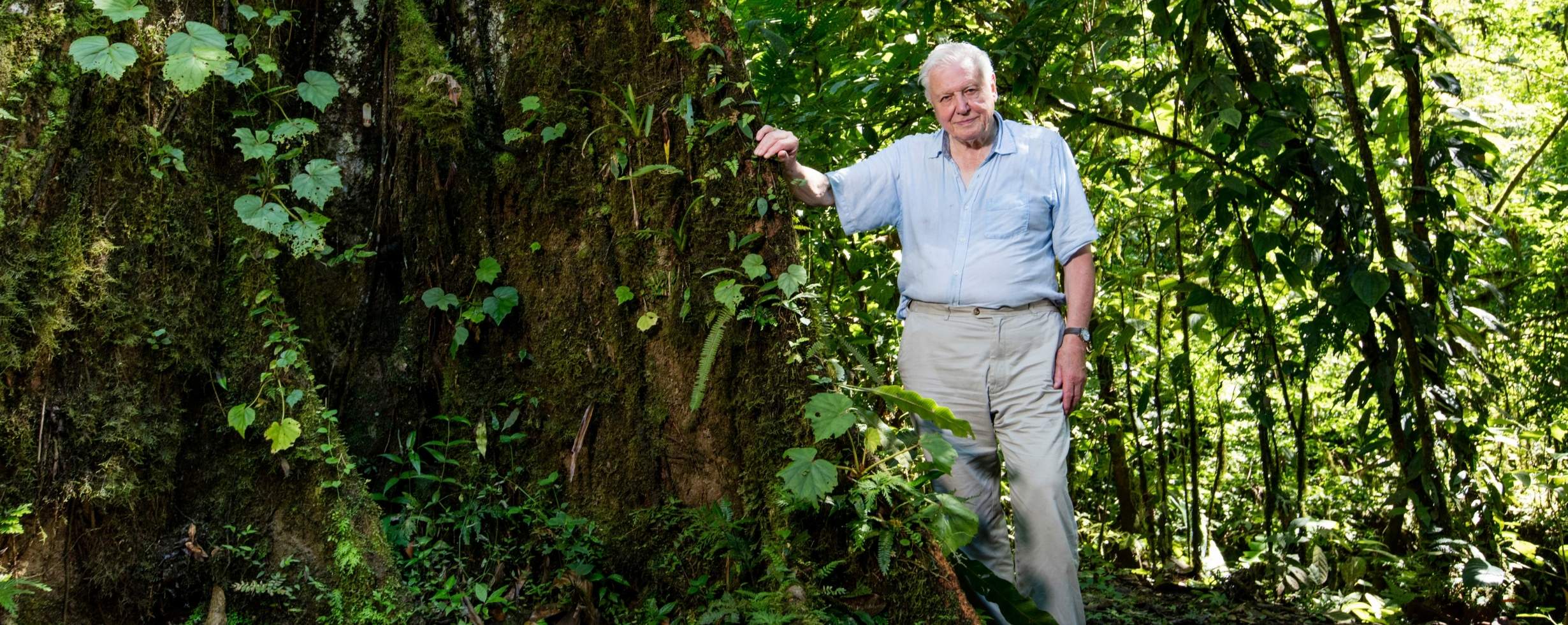
As Sir David Attenborough reaches his 100th year, we explore two Saga holidays that capture the spirit of his life’s work.
For generations, Sir David Attenborough has helped us see the natural world a little differently. He’s made us marvel at creatures to which we might never otherwise have given a second thought, from turtles and tree frogs to marine iguanas and blue-footed boobies. More than that, he’s taught us that wonder and responsibility go hand in hand.
So, as he reaches his 100th year, it feels only right to look at the places where we can experience a little of that same magic for ourselves. Not just beautiful destinations, but places where wildlife is thrillingly close and conservation is part of the story too.
Here are two Saga trips that do exactly that: Wild Costa Rica, with its turtle-nesting beaches and rainforest reserves; and Ecuador and the Galápagos, where some of the world’s most remarkable wildlife is fiercely protected.
If there’s one destination determined to prove tourism and conservation can work together, it’s Costa Rica. This is a country of rainforest, rivers, reserves and wildlife-rich national parks, where nature never feels far away.
And that’s no accident. Costa Rica was one of the first five winners of the Earthshot Prize in 2021, recognised in the Protect and Restore Nature category for an extraordinary turnaround that saw its forests double in size after decades of deforestation. Appropriately enough, Sir David Attenborough sat on the judging panel.
“The majority of Costa Rica is protected national parks and reserves, and they’re doing so much for conservation,” says Cassie Stickland, senior product manager at Saga Holidays. “It’s such a natural fit for this kind of trip, because guests aren’t only seeing incredible wildlife, they’re also seeing a country that’s made conservation part of its identity.”
Costa Rica clearly left its mark on Attenborough too. Behind-the-scenes material for The Green Planet revealed that he returned to one Costa Rican site 30 years after first visiting it, by which time what had once been grassland had become restored rainforest.

One of the highlights of Saga’s Wild Costa Rica tour is a two-night stay in Tortuguero National Park, one of the country’s best-known protected areas and a vital nesting and hatching zone for sea turtles. The tour also includes a visit and donation to the Sea Turtle Preservation Centre in Tortuguero, operated by The Sea Turtle Conservancy, linking the trip directly to the long-running work being done to help protect these extraordinary animals.
And if you book onto certain September or October departures, there’s the added chance to see that work in action.
“On our September and October departures, we offer a guided turtle-watching tour as an optional excursion,” Stickland explains. “It’s an incredibly moving thing to witness, creatures following the same ancient rhythms they’ve followed for millions of years.”
Costa Rica’s Attenborough connection runs deeper still. The Wild Costa Rica tour also visits La Tirimbina Biological Reserve in Sarapiquí for a guided night walk through the rainforest. This is where things get really rather special.
“Tirimbina is an eco-lodge and research station in the Sarapiquí region, right in the heart of the rainforest and surrounded by lush vegetation, diverse wildlife and the beautiful Tirimbina River,” says Stickland. “It’s committed to sustainable tourism and environmental conservation through all sorts of eco-friendly features and programmes.
What’s rather special is that David Attenborough has actually visited the reserve. There’s even a plaque on the wall, outside the room he stayed in.”
It is a small detail, admittedly, but for anyone who grew up watching Attenborough, it gives the trip an added layer of meaning. There is something rather lovely about standing in a place he once stayed and feeling a little closer to the world he has spent so many years bringing to life.
If Costa Rica feels immersive and close-up, Ecuador and the Galápagos has the pull of a true wildlife pilgrimage.
Few places spark the imagination quite like the Galápagos Islands. Remote, unusual and packed with species found nowhere else on Earth, they have a kind of natural wonder that can feel almost unreal.
This is not a place where the wildlife is just a happy bonus. It is the reason you go.
“There’s a huge amount of endemic wildlife to be protected in the Galápagos and David Attenborough has made a number of programmes about the wildlife of the islands,” says Stickland. “It’s one of those places people dream about for years.”

For Attenborough fans, the connection runs deeper than the wildlife alone. When he returned to film Galapagos 3D in 2012, Sky described it as his fourth visit to the islands, which says a lot about the enduring pull the archipelago clearly had for him. During that trip, standing beside one of the Galápagos’ famous giant tortoises, he joked: “He’s about 80 years old and he’s getting a bit creaky in his joints… as indeed am I.”
What makes the Galápagos especially compelling, though, is how seriously the islands take that protection.
“The whole of the Galápagos is so fiercely protected,” Stickland says. “We include the $200 Galápagos Preservation Fee in all of our Galápagos holidays. The funds raised from this fee are directly channelled into conservation initiatives, infrastructure upgrades and community programmes aimed at mitigating tourism’s ecological footprint on the islands.”
It may not sound quite as romantic as spotting a rare bird or watching sea lions basking in the sunshine, but it is part of what makes the trip feel so worthwhile. The Galápagos is extraordinary because it is so carefully protected. Visitors are not simply turning up to admire it, they are also helping, in a small but important way, to support the work that keeps it special.
That feels very Attenborough too. Because for all the breathtaking television he has given us over the years, his real legacy is not just showing us nature at its most beautiful. It is helping us understand why these places matter and why protecting them cannot be a choice.
Choose Costa Rica if…
You love the idea of dense rainforest, sea turtle habitats and wildlife that feels thrillingly close. It’s a particularly good fit if you want to see conservation in action, from Tortuguero’s turtle protection work to the eco-focused setting of La Tirimbina Biological Reserve.
Choose Ecuador and the Galápagos if…
You’ve always dreamed of visiting one of the world’s great wildlife destinations. With remarkable endemic species and a strong focus on protecting the islands, this is the trip for travellers who want a true bucket-list adventure with a powerful conservation story behind it.

What links Costa Rica and the Galápagos so well is that both offer much more than a list of memorable sightings.Yes, there’s the excitement of what you might spot. A nesting turtle. An extraordinary bird. Something darting through the trees on a night walk. But what makes these trips feel different is that they also bring you closer to the work of conservation itself.
You come away not just having seen remarkable wildlife, but with a better sense of what goes into protecting it and why that matters. That, really, is at the heart of David Attenborough’s work. The wonder is part of it, of course, but so is the reminder that the natural world needs more from us than admiration alone.
Madagascar For lemurs, baobabs and species found nowhere else on Earth. Millions of years of relative isolation have helped make Madagascar feel like a natural world apart.
Botswana and Zimbabwe For big wildlife, river safaris and the drama of Victoria Falls. There’s also the pleasing bonus of following in the footsteps of another famous David – Doctor David Livingstone – on a trip that combines Chobe National Park, a Zambezi cruise and the spectacle of the Falls.
Kenya For classic safari appeal and the chance to see some of Africa’s most iconic wildlife in a destination long associated with conservation and protected areas.
India For jungle safaris in the parks said to have inspired The Jungle Book, from Pench and Kanha to Bandhavgarh, tracking tigers, leopards and sloth bears through the wild.
Antarctica For the quiet majesty of the white wilderness and wildlife-rich Antarctic waters, paired with the spectacle of Rio and Iguazu Falls.
(Hero image Credit: BBC)



Booked your trip and thinking about travel insurance? When you're looking to compare travel insurance, don't settle for less.

Saga offers escorted tours throughout Europe and as far afield as South Africa, Japan, Canada and Australia, plus hotel stays in popular European hotspots including Spain, Portugal, Croatia and Greece.

Ancient palaces, crystal-clear seas and undiscovered budget beaches – our travel experts share the best travel destinations for 2026.

Our guide to the most remarkable places to visit in Africa, the continent of contrasts.
.jpg?la=en&h=760&w=1730&hash=3900F1F9D5EBD1961A7DFC7B29B5BA1A)
Holidays can boost your brain power, help you live longer and even relieve pain.




Autumn on Europe’s rivers is always spectacular. We’ve got the best cruises to try in 2025.

We help you beat the airlines at their own game with the cabin bag weight and size limits for the UK's seven most popular carriers.