John Nichol on why Blitz stories still need to be told
The Gulf War veteran and author says it was a privilege to talk to some of the last Blitz survivors.
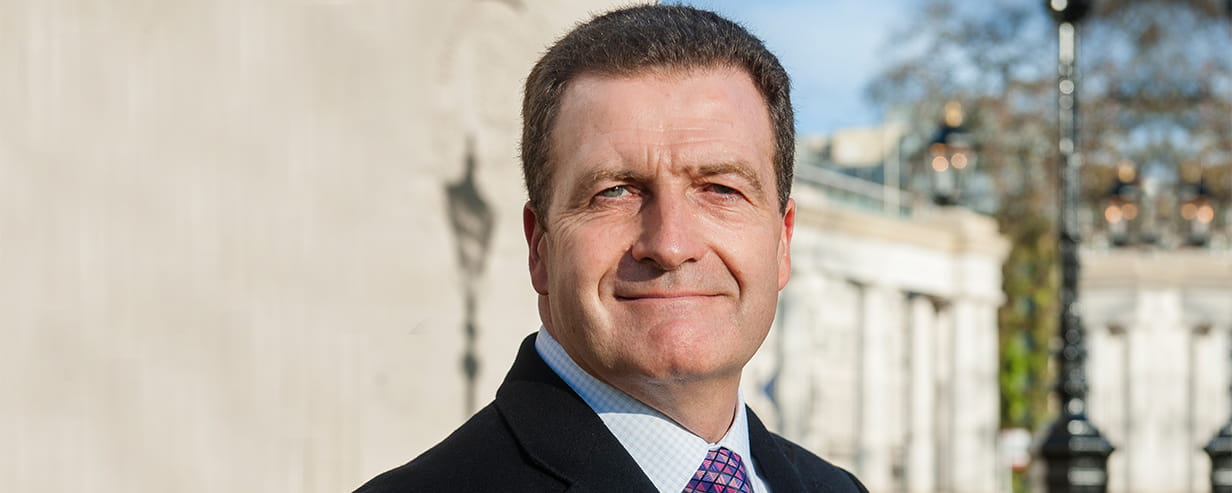
The Gulf War veteran and author says it was a privilege to talk to some of the last Blitz survivors.
In 1991, during the Gulf War, I was part of an RAF Tornado crew that got shot down. Iraqi forces held us for seven weeks. I was repeatedly beaten and was eventually paraded in front of TV cameras.
Although it happened 35 years ago, I have never watched that TV footage. Why? Because I’m ashamed I gave in and started answering my captors’ questions.
It wasn’t the beatings that made me crack. It was when they put tissue paper down my back and set fire to it. I didn’t want to die.
I always get asked if being a prisoner of war has shaped my life. Of course it has. Even now, if a car backfires, I’m back there. If I see an ad for a donkey sanctuary, I’m in tears. I can’t bear suffering.
My generation was one of the first to acknowledge that war can cause injury of the mind: PTSD. But if I hadn’t gone through my experience, I wouldn’t have had the life I’ve had.
My wife Suzannah and I met the night after the launch of my second book, Team Tornado. Some RAF mates came to London and we went out for beers – one of them brought her along as they’d been friends at university.
Apparently, the moment she saw me she said, ‘That’s the man I’m going to marry’.
Not long after we started dating, I was in Bosnia, policing the no-fly zone. It wasn’t as dangerous as Iraq, but I had to write letters to my family to be handed over in the event of my death. There was one for Suzannah, too, and she then understood what life in the military meant.
I’m grateful she and my daughter, Sophie, 21, weren’t around when I was held prisoner. My mum and dad went through so much worry. They only knew I was alive after I was released.

When I returned from Iraq, I was against women serving on the front line. I thought that if they were captured and kept prisoner, there could be serious problems.
But the real problem was my misogyny. Once I realised I was wrong, I started championing front-line flying by women. What we had was a sexist policy.
Women were on the front line in this country during the Blitz. Mention the Blitz and people think of London, but it didn’t end there.
My new book is called Blitz: When World War Two Came Home, and that’s what the German bombing campaign did: it brought war into our towns and cities for six years. One of the incidents that inspired this book was a 1944 newspaper report from my hometown, North Shields: more than 300 bombs and 18,000 incendiary devices destroyed 160 properties and killed 225 people.
That was happening everywhere. I can’t tell you what a privilege it was to interview some of the people who survived – sadly, there aren’t many left, and their stories need to be told.
(Hero image credit: Shutterstock)
Blitz: When World War Two Came Home, by John Nichol (Simon & Schuster UK)

Subscribe to Saga Magazine from just £1 and read the rest of this article in the Saga Magazine app. You’ll get access to our digital archive of over 40 back issues, plus the current edition.


Your chance to explore Germany’s wine region on board Spirit of the Moselle, on a trip worth over £2,450 per person.

Dame Prue Leith talks about her secret to staying young and why she’s finally slowing down at 86.

TV’s Dr Hilary Jones on why he wants sweeping reform to modern healthcare.

The actor bids farewell to Downton and looks forward to his starring role in a new West End show.

The TV historian on overcoming a difficult childhood and what it was like to appear on Celebrity Traitors.

The wildlife filmmaker on his close call with a polar bear and why hanging out with lions is less scary than driving in the UK.

The Irish author, 62, on escaping the news through writing, staying sober and scrolling the internet for pretty things.

The actress opens up to Jenni Murray on Saga's podcast Experience is Everything.