Expert ways to relieve the pain of dodgy hips
Hip pain becomes more common as we age, but you don’t have to put up with it. Try these tips and exercises to help you delay – or even prevent – a hip replacement.
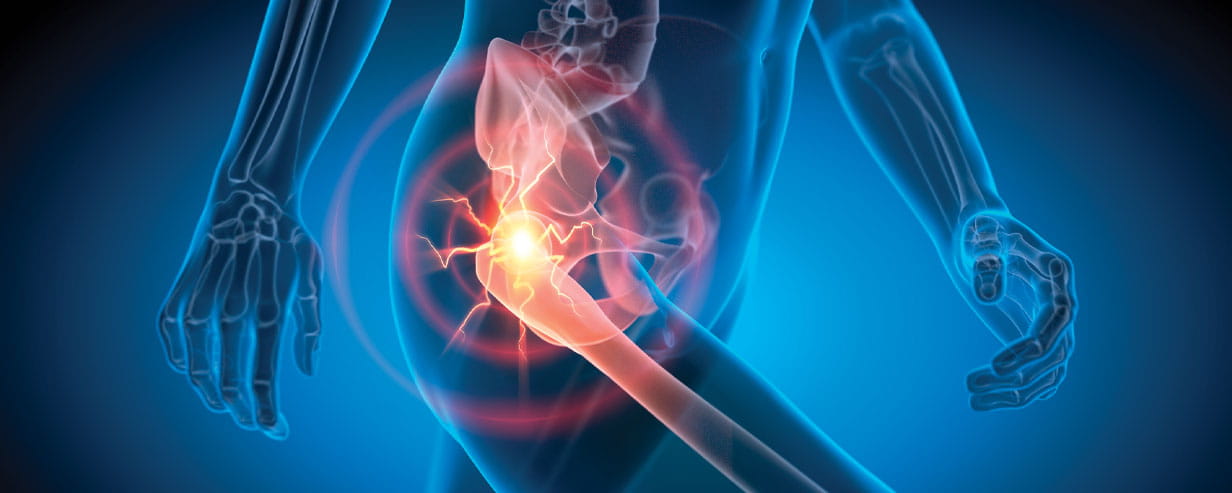
Hip pain becomes more common as we age, but you don’t have to put up with it. Try these tips and exercises to help you delay – or even prevent – a hip replacement.
Chronic hip pain affects an estimated 3.2 million people in the UK, and the older you are the more likely you are to suffer from it.
The hip joints are ball and socket joints and they have big jobs to do – as major load bearers, as protectors of stability, and as major players in transmitting force from the trunk to the legs while standing, walking, and running.
“My message to anyone struggling with hip pain is this: don’t wait, and don’t accept it as inevitable,” says chartered physiotherapist Sammy Margo, founder of SmartPhysio in London.
“Most people with hip pain – even significant arthritis – can achieve meaningful improvement in their quality of life.”
The most common cause of hip pain in older people is osteoarthritis (OA), the wear and tear kind where progressive loss of the spongy shock-absorbing cartilage leads to pain, stiffness, and reduced mobility.
“The older you get, the more load you will have put through your hip, and the cartilage that lines the joint can thin and wear out, although osteoarthritis is not an inevitable part of ageing,” says James Donaldson, consultant orthopaedic surgeon at the private HCA Wellington Hospital, London, and the Royal National Orthopaedic Hospital, Stanmore.
“Around 50% of over 65s will have some hip arthritis if you scan them but not everyone will feel pain, or they do but it doesn’t bother them, and they can cope with it. Around one in 10 of these will be at risk of needing a hip replacement. We do around 100,000 a year of these operations in the UK.”
“Hip osteoarthritis causes pain, stiffness, and reduced mobility, primarily felt in the groin, buttock or thigh,” says Donaldson. “But pain can also radiate down the thigh to the knee.”
People with hip OA also complain of stiffness in the joint most of the time, as well as pain triggered by activity, such as walking, running or climbing stairs, that gets better with rest.
“I’ll sometimes examine patients and I’ll actually be able to hear their hip joint creaking (called crepitus) quite loudly, but this tends to be in quite advanced disease,” adds Donaldson.
The hip can also make a grinding noise or lock, making movement difficult.
Symptoms can come and go, and the pain can be so intense it can wake you up at night or make it painful to walk up and down stairs, get up out of a chair, or in and out of a car.
“You may feel your hip is stiff and have difficulty putting your shoes and socks on and even start limping, because your brain is trying to protect that joint,” says Donaldson.

“I’d say if your pain hasn’t gone away after six weeks it won’t be a muscle or a soft tissue type injury, and if that pain is potentially requiring painkillers, or it’s limiting your function and your lifestyle, I’d get it checked out,” says Donaldson.
“No, it’s by no means inevitable, particularly if you act in the earlier stages,” says Donaldson. “Physiotherapy, lifestyle changes, and exercises can make a difference and postpone the need for a hip replacement. Some patients end up not needing the operation at all.”
One study which followed 109 patients with hip OA symptoms over six years found that the need for a hip replacement was reduced by 44% in patients who attended a 12- week exercise and education programme. The exercises (three sessions a week) consisted of strengthening, flexibility and functional exercises.
“There’s less risk of complication, and patients are prepared both physically and psychologically for the surgery, so they tend to do much better if they’ve gone through the ‘prehab’ route,” says Donaldson.
However, a survey published last year found that only 14 out of 27 NHS hospitals polled across seven health regions provided “prehab” sessions for patients on hip replacement waiting lists.
Find out about Saga's joint replacement cover
“Losing 10% of your bodyweight can reduce pain by 50%, and if you do end up needing surgery, you have more chance of a successful outcome with fewer complications,” says Donaldson.
“If you’ve got half the pain that you had beforehand, it might be that your function is not affected and you’re happy to manage that with lifestyle changes and simple painkillers and then the operation isn’t needed.”

“There are a couple of simple changes that can improve your hip health, including avoiding sitting with your legs crossed, not sitting in low armchairs and sofas, and wearing sensible shoes rather than high heels, all of which put pressure on the hips,” says Donaldson.
“Using a walking stick is actually pretty helpful, as it can reduce the force going through the hip by a third. The stick needs to go in the opposite hand to the affected hip.
“Taking painkillers before a walk can also reduce the pain and make it more bearable.”
Margo says strengthening the muscles around the hip is the single most important thing you can do for hip pain. Try these:


Arthritis UK has a series of videos on hip exercises

Essentially, no. “One of the most damaging things people do with hip pain is to stop moving,” says Margo. “Sustained rest leads to weakened muscles, stiffer joints and worsening pain.
“Aim for 20 to 30 minutes of gentle walking each day – try 10 minute ‘snack walks’ if 30 minutes is too uncomfortable. Swimming, cycling, and water aerobics are all excellent low impact options.”
Consult your GP about the pain relief that is best for you.
The National Institute for Health and Care Excellence (NICE) guidelines on OA recommends topical ibuprofen (5%) gel up to five times a day, if there no contraindications, or – if that is ineffective – oral NSAID (anti-inflammatory) pills such as ibuprofen, depending on your individual risk factors and other medication you take.
Paracetamol and codeine can also be used for short-term pain management.
“Glucosamine and chondroitin, are probably the two most popular supplements, but there is no evidence that they help or reverse arthritis,” says Donaldson.
“I tell my patients it may be worth trying them, because they don’t cost a lot of money. Give it a go for six or eight weeks. Some patients do get benefits, but equally some don’t. So if it doesn’t help, I would suggest stopping it and going with a more conventional way of managing it with physio, painkillers, and a walking stick.”
NICE says chondroitin and glucosamine, local anaesthetic, and rubs which cause a warming sensation are not recommended, and neither are acupuncture and dry needling (use of acupuncture style needles into myofascial trigger points around an injury).
“Attitudes as to exactly when you need a hip replacement have changed over the last 20 years,” says Donaldson. “When I was at medical school, the feeling was patients should put it off for as long as possible – usually until they retired – because we believed the replacement joints would wear out and they would need a second operation later in life. But that’s no longer the case and it’s rather old-fashioned advice.
“Even if you’re young, if your symptoms and X-ray are bad enough, you could benefit from a hip replacement. We now have joints that will last 20-25 years at a conservative estimate. People are living longer and want to be more active for longer and are less likely to accept restrictions on their mobility.”
If painkillers, physiotherapy, lifestyle changes and other treatments are no longer controlling your pain, this may be the time to have the operation, he says.
There’s no upper age limit for a hip replacement, but generally the operation is better done before a person becomes too frail.
“A hip replacement is the end of the line when everything else has been tried and is no longer working, but it’s a good operation which gives patients the second-best improvement in quality of life from any surgery [only cataract operations improve quality of life more],” says Donaldson.
“The risk of a problem is 1-2%, which means the majority of people are going to do very well indeed. The key is identifying when the patient needs it, so we don’t actually leave it too late, when it’s more difficult to recover from the operation.”
Donaldson says his patients tell him that knee replacements are more painful than hip replacement operations and take longer to recover from.
These days the operation can be done with just an overnight stay and patients are usually walking, using crutches or a frame within six to 24 hours, and driving within six weeks. Most people can resume light activities within six to 12 weeks.
This varies according to where you live, but the current average waiting time is 27 weeks (6 months). The operation costs between £11,000 and £19,000 privately.
(Hero image credit: GettyImages)


We partner with Co-op Legal Services to offer advice and services for you and your family.

Buy direct and start a new Saga Health Insurance policy by the end of 10 December 2026 to get your first 3 months free. T&Cs apply.
Underwritten by Bupa Insurance Limited.




The secret to being a successful trail ultra-runner as you get older includes a lot of walking and eating.

Running a half marathon is all about the right training. Here’s how to go about it.

Your questions answered about what really is a good 5k time.


Expert advice on how to train for a 5k with just three runs a week.

Running your first 5k is all about getting the pace right.