Your mobility can change as you age. Here’s how to stay in control
You can’t stop yourself getting older, but you can give yourself the best chance of staying active, independent and doing what you enjoy.
Mobility isn’t something you either have or lose overnight. It’s more of a slow negotiation – getting out of a low chair takes a bit more thought, the stairs feel steeper, a heavy pan needs two hands instead of one. None of that means you’re on an irreversible slide.
“We shouldn’t wait until we’ve lost an ability before deciding it’s important,” says functional capability specialist Ian Northcott.
Ageing does mean losing some muscle strength, balance and range of movement but how much we lose, and how quickly, varies enormously. There’s also plenty we can do to hold on to what we have.
“Loss of physical capacity isn’t always something we should simply accommodate without also considering whether some of that capacity can be maintained or improved through appropriate exercise,” says Northcott.
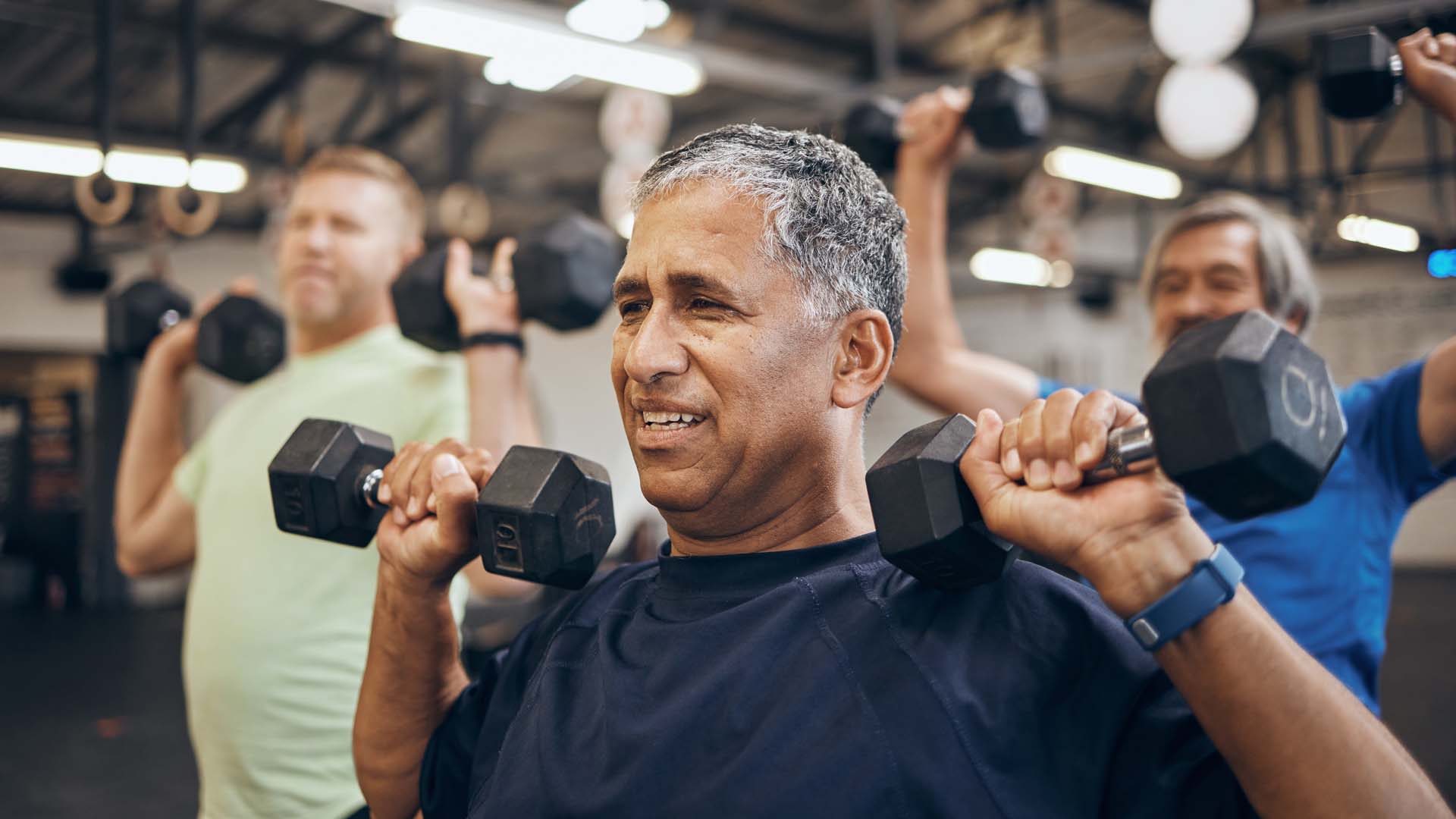
“Strength underpins so many of the tasks that allow us to remain independent,” explains Northcott. “Walking is excellent, and I absolutely encourage it, but walking alone doesn’t provide all the strength stimulus we need to preserve our ability to push, pull, lift, carry and repeatedly move our own bodyweight.
The good news? Strength is something we can work on at any age, and you don’t need a gym membership to start.
Pilates teacher Sammy Taylor says chair-based exercise can be a stepping stone. As strength and confidence improve, you can gradually introduce more standing movement where appropriate. The important thing is to start from where you are, rather than waiting until you’re fitter or more mobile before you begin.
“It doesn’t mean you’re doing a lesser version of exercise,” she says. “You can effectively work the legs, core and upper body from a chair, as well as practising coordination, posture and controlled movement.”
Exercise can be about more than movement, too. “I think we all know social connection is really important to ageing too, so if you can combine exercise and social connection, that’s obviously really good,” says Age UK’s policy expert Lisabel Miles.
If you don’t know where to start when it comes to improving your mobility and strength, these simple movements are a good place to begin and you can adapt them to suit your ability.
Northcott recommends these if you’re otherwise healthy. Start with a manageable number of controlled repetitions, using a stable surface for support where needed. Two well-structured sessions a week is an excellent starting point, don’t go all out in your first few.
Sit on a sturdy chair, feet firmly on the floor, and stand up in a controlled way. Lower yourself back down and repeat. This works the muscles you need for everyday movements like getting up from a chair and climbing stairs.
Stand facing a wall, hands against it at chest height. Keeping your body in a straight line, bend your elbows to bring your chest towards the wall, then push back. Adjust your distance from the wall to make it easier or harder.
Stand behind a sturdy chair, raise your heels so you’re on your toes, then lower with control. Hold on for support if you need it.
If standing exercises don’t feel comfortable yet, Taylor recommends starting with simple seated movements. You can do these regularly throughout the day, even five to 10 minutes can be a useful starting point.
“Exercise can be incredibly beneficial, but it should be appropriate for the individual,” advises Taylor.
She recommends speaking to a GP, physiotherapist or other appropriate healthcare professional before starting a new exercise programme if you have:
Building physical capacity and adapting your surroundings aren’t competing ideas. Sometimes the best way to stay independent is to do both.
Northcott gives the example of a raised chair which can make standing easier, but it might also be worth considering whether lower-body strength can be improved alongside the adaptation.
“The biggest mistake is usually leaving adaptations until a crisis occurs,” says Uplift’s occupational therapist Kate Sheehan. “Many people don’t start thinking about accessibility until after a serious fall, illness or injury, by which point decisions often need to be made quickly and under pressure.”
Instead, she advises looking around your home now and considering where small changes could help you stay independent. “Don’t panic and don’t assume major building work will be required,” says Sheehan. Her advice is to think honestly about how you use your home now, how that might change and then seek professional advice before spending money on adaptations.
The aim isn’t necessarily to make your home stair-free or completely redesign it. As Miles puts it: “You want to make sure that if you can’t get up the stairs, then there’s a way in which your home will work.”
Bathrooms are one of the most common locations for falls, so Sheehan recommends thinking about features such as a level-access shower, slip-resistant flooring, effective lighting and reinforced walls for future grab rails.
“This is one of the most overlooked areas of the home when it comes to future-proofing,” says Sheehan.
An eye-level oven can reduce the need to bend and lift heavy dishes, drawers are often easier to access than cupboards, and good overhead and task lighting makes preparing food safer.
Don’t automatically assume stairs are something you need to eliminate.
“Stairs aren’t necessarily a bad thing,” says Miles. “It’s quite good for keeping fit going up and down them.”
The important thing, she says, is making sure your home can still work if you eventually find them difficult, whether that’s through a stairlift, a downstairs bedroom or having a toilet on the same floor.
The approach to your home matters too. Sheehan suggests considering whether it’s level, well-lit and easy to navigate, with improvements such as well-designed handrails or a level area by the front door where needed.
Adaptations aren’t always about stairlifts and showers.
“It can just be small adaptation sometimes that gives them that confidence back,” says Miles. Moving everyday items within easy reach, improving lighting, clearing clutter and swapping fiddly handles for easier ones can all help.
Mobility isn’t only about getting safely from one room to another. As Miles points out, it’s worth thinking beyond the four walls of your home.
“If you’re not going to be able to drive, how are you going to get to the shops? How are you going to get to your doctor’s appointment?” she asks.
These might sound like questions for the distant future, but thinking about them now can catch small problems before they become big ones.
A local shop, a bus route, a lift from a friend or a simple piece of equipment could be the difference between something staying easy and quietly becoming something you stop doing.
The aim isn’t to predict every possible problem. It’s simply to spot where a little forward planning could help keep your world bigger.
“You want to fight the fight and carry on doing stuff,” says Miles. “That determination is really good. On the other hand, there’s a point where you’re just living on luck a bit, and you want to avoid that.”
There’s a fine line between staying determined and making life unnecessarily difficult. Getting help doesn’t mean giving up your independence. In fact, the right support can be exactly what allows you to keep it.
That might mean asking an occupational therapist to assess your home before you spend money on adaptations, finding out whether you qualify for a grant or loan, or checking what’s available through your local Age UK. Some local Age UK branches offer handyman schemes and practical advice on making a home work better.
Financial help is also available if you need it. The Disabled Facilities Grant can contribute towards the cost of adaptations if you’re eligible – you can check what you might be entitled to at gov.uk/disabled-facilities-grants.
The goal isn’t to prove you can manage everything alone. It’s to keep doing the things you want to do, and sometimes the smartest way to do that is to accept a little help along the way.
Jayne cut her online journalism teeth 25 years ago in an era when a dialling tone and slow page load were standard. During this time, she’s written about a variety of subjects and is just at home road-testing TVs as she is interviewing TV stars.
A diverse career has seen Jayne launch websites for popular magazines, collaborate with top brands, write regularly for major publications including Woman&Home, Yahoo! and The Daily Telegraph, create a podcast, and also write a tech column for Women’s Own.
Step aboard our boutique sister ships in 2025 and experience award-winning all-inclusive luxury, with a nationwide return chauffeur service included in the price. Plus, keep an eye out for our brand-new TV advert!
Find out about Saga’s walking holidays here…
Saga’s walking holidays are perfect for exploring Europe’s stunning destinations on foot. They’re suitable for all fitness levels and offer a well-balanced mix of guided walks and relaxation.
We examine the science and how to best look after our brain as we get older.
Want to start winter mornings feeling energised? Follow these five simple tips.
Expert nutritionists break down the most important foods to eat in each decade as we get older.
Your neighbourhood pharmacist now offers a surprising number of services.
10 simple alternative items that can have a big effect on your health – without depriving you.
New measures for GP appointments are in the headlines, but what effect will they have for you when it comes to getting to see a doctor?
Everything you need to know about the lung infection, and how you could be ill with “walking” pneumonia without realising it.