Image credit: Shutterstock/PeopleImages.com - Yuri A
Get all our latest money stories and exclusive offers direct to your inbox. Sign up here.
This article is for general guidance only and is not financial or professional advice. Any links are for your own information, and do not constitute any form of recommendation by Saga. You should not solely rely on this information to make any decisions, and consider seeking independent professional advice. All figures and information in this article are correct at the time of publishing, but laws, entitlements, tax treatments and allowances may change in the future.
Figures show that older people face ever-increasing tax bills. It’s never been more important, therefore, to arrange your finances in such a way that you keep hold of as much of your hard-earned wealth as possible.
One way to do this is by keeping abreast of the allowances that are attached to different types of tax, for example, income or capital gains. Exploiting these each tax year is a way of reducing the amount that you’re legally required to pay the authorities in the shape of HMRC.
To help you organise your affairs, we’ve put together 20 tips from financial experts each designed to bring down the tax bill on your savings and investments.
In short, they’re going up. According to the latest official figures, retirees paid a record-breaking £29.8 billion in income tax during the 2024/25 tax year, an increase of more than 40% in two years.
Rising tax bills are largely due to frozen income tax thresholds, which have stayed the same since the 2021/22 tax year and aren’t due to be reviewed until 2030/31 at the earliest.
In effect, the point at which we start paying tax or, where relevant, start paying higher rates of tax, hasn’t risen in line with incomes.
As a result, an increasing number of people are stealthily being sucked either into paying tax for the first time or are being nudged further up the tax ladder to face a bigger bill.
The figures are eye-popping. Since the freeze began five years ago, three million more pensioners have since started paying income tax. That takes the total number of retired taxpayers to 9.5 million this year.
In addition to increasing numbers of retirees starting to pay tax, frozen tax thresholds also mean a million people are now paying tax at both the higher, as well as the additional, rate (see below for these definitions).
What’s more, becoming a higher rate taxpayer doesn’t just mean you pay more tax on your income. It has financial consequences for other allowances that individuals receive.
For example, the personal savings allowance of £1,000 for basic rate taxpayers reduces to £500 for higher rate payers and is lost altogether once you reach the additional rate bracket.
In a similar fashion, the rate you pay on capital tax gains tax (CGT) – the tax that applies when you dispose of an asset such as shares – is based on your income tax status as well as any profit you are fortunate enough to have made on a particular asset.
CGT receipts stood at £24.2 billion for the 2024/25 tax year, a new record.
In England, Wales and Northern Ireland, you can earn up to £12,570 a year without paying income tax.
‘Basic’ rate tax of 20% then applies between £12,571 and £50,270. This increases to ‘higher’ rate tax of 40% between £50,271 and £125,140, which then jumps to the so-called ‘additional’ rate of 45% on amounts above this.
In Scotland, the £12,570 figure also applies, but this is followed by six interim bands from ‘starter’ to ‘advanced’, up to a ‘top’ rate of 48% on income above £125,140.
The overall answer is a combination of being smart with the products that you choose, the benefits they offer, and a little knowledge about the relevant tax allowances that affect each aspect of your finances.
Make the most of your personal savings allowance, advises Sarah Coles, head of personal finance at AJ Bell. Note that this is a different allowance to your income tax annual personal allowance.
Coles explains that: “The personal savings allowance means the first chunk of interest on your savings might be tax-free.
“Basic rate taxpayers can receive up to £1,000 in interest from savings accounts each year without paying tax, while higher-rate taxpayers can receive up to £500. Additional-rate taxpayers don’t have this allowance.”
Note that tax on savings interest more than the savings allowance is currently taxed at the same rate as income. But, from April 2027, this will rise by two percentage points to 22%, 42% and 47% for basic, higher, and additional rate taxpayers respectively.
Sarah Coles says married couples can also work together to reduce their tax bill. “If your partner pays a lower rate of income tax than you, it can be worth moving taxable savings into their name, so tax is paid at a lower rate.
“For example, any savings exceeding your personal savings allowance might face a lower rate of tax if you move it to your spouse.”
Only do this, however, if you have shared financial goals. Think carefully before you make the move as the money will legally be your partner’s once you’ve made the transfer.
With their tax-efficient status, Individual Savings Accounts, or ISAs, play a key part in the personal finances of many people.
Alice Haine, head of personal finance at Hargreaves Lansdown, says: “Taking advantage of your £20,000 tax-free ISA allowance for cash savings is always important, as any income generated within the wrapper is protected from tax.
“There are additional considerations for the current 2026/27 tax year, however, because ISA rules are set to change from the new tax year that begins on 6 April 2027.”
This will see the amount that savers under the age of 65 can save into cash ISAs capped at £12,000.
Haine adds: “For under-65s who need to give their cash savings a boost, whether to increase the size of their emergency fund in retirement, or to cover a significant near-term expense, it could make sense to make full use of this year’s cash ISA allowance while they still can.”
AJ Bell’s Sarah Coles says: “If you earn less than the personal income tax allowance from wages and pensions, you also benefit from the starting rate for savings, which means that the first £5,000 of interest on your savings is tax-free.
“You get the personal savings allowance on top of that. It means you can make £12,570 from wages [or pensions], and £6,000 in savings interest without paying any tax.
“However, for every £1 of non-savings income over your personal allowance, you lose £1 of your starting savings allowance, so if you earn £17,570 you lose all the allowance.”
If you’re married, or in a civil partnership, and one of you is eligible for the starter rate for savings, consider switching cash savings to the eligible partner.
The starting rate for savings and the personal savings allowance can be ‘stacked’ with other allowances to give you an impressive tax-free income.
If you have used up your ISA allowance and you’re paying tax on savings interest, you might consider Premium Bonds from the government-backed provided NS&I. because the cash prizes are paid tax-free.
From the September 2026 draw, the ‘prize fund rate’ was increased from 3.8% to 4.35%. This means that for every £1,000 NS&I holds, it will pay £43.50 out in prizes.
But bear in mind that Premium Bond prizes aren’t guaranteed. What’s more, the prize fund rate does not necessarily provide a meaningful indication of what you might win.
Your chances of winning will be more heavily influenced by the number of bonds that you hold – the more you have, the more entries you’ll have in the monthly draw.
According to a freedom of information request from AJ Bell earlier this year, almost two-thirds of bond holders have never won a prize. Between February 2025 and January 2026, just 6% of prizes went to people with £10,000 or less in bonds.
The maximum you can hold in Premium Bonds is £50,000.
Gilts are loans, or IOUs, to the UK government that pay a ‘coupon’ – a type of interest payment – in return for an initial investment which is then returned at the end of the bond’s life.
Gilts are traded in the bond market. The interest is liable for income tax, but any gain in value is exempt from capital gains tax, so they can provide a tax-effective alternative to savings accounts.
Consider reducing your pension withdrawals if you’re breaching the higher-rate tax threshold of £50,270 in England and Wales.
Not only will you start paying more tax on income over this threshold, but your personal savings allowance for savings interest falls from £1,000 to £500.
If you live in Scotland, higher rate tax begins at £43,663, while the advanced rate applies between £75,001 and £125,140. But it’s still the England and Wales threshold that affects your personal savings allowance and capital gains tax rates.
If you have money saved in ISAs, you can use that to top up your income, without increasing your tax bill.
If you have used up your own ISA allowance and you’re paying tax on savings interest, you could consider paying into a child’s junior ISA on their behalf. Children have an ISA allowance worth £9,000 a year, gains are tax-free and they won’t be able to touch their money until they are 18.
In addition to helping them build a nest egg, giving money to grandchildren can also be a helpful way of reducing a potential inheritance tax bill.
If you’re close to breaching your personal savings allowance for the current tax year, consider opening an account that pays interest annually or on maturity.
That way, interest will count towards the next year's tax allowances instead. Or, even the following year, if it’s a fixed-rate bond longer than 12 months that only pays interest on maturity.
This can work particularly well if you expect your taxable income to drop from higher-rate to basic-rate next year, entitling you to a bigger personal savings allowance in the future. Or if you expect your income to drop low enough to make you eligible for the starter rate for savings.
If you still have a mortgage, using your savings to ‘offset’ your debt can be more tax-efficient than a standard savings account. Instead of earning interest (which is taxable), your savings are used to reduce the mortgage balance you are charged interest on.
Effectively, you earn a tax-free 'return' equal to your mortgage rate. When mortgage rates are higher than savings rates, this can save you significant money.
Tax-Exempt Savings Plans (TESPs) offered by friendly societies (savings institutions owned by their members) are tax-free accounts that can sit alongside your ISAs.
The limits are much lower, usually allowing you to save up to £25 a month or £270 a year, but there’s no income tax or capital gains tax. There’s usually a guaranteed minimum return at maturity, plus bonuses (although these are not guaranteed).
They do, however, normally require a commitment of 10 years, so it’s important to compare your likely returns with those that might be available from other more flexible savings or investment accounts.
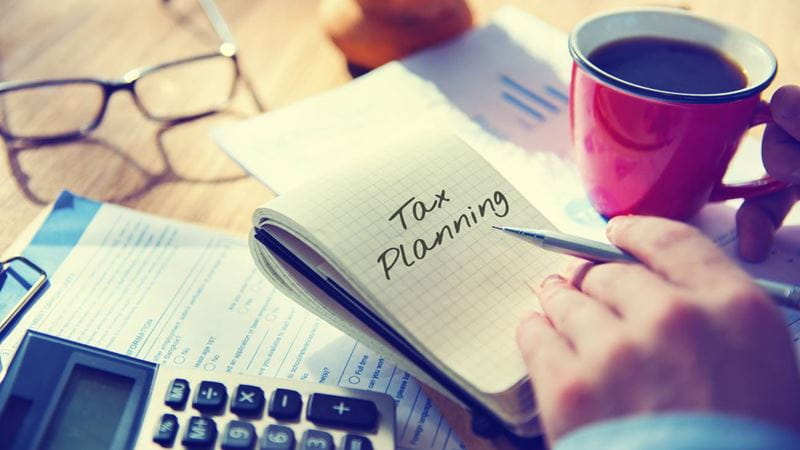
ISAs aren’t just a savings vehicle for cash. You can also use your total £20,000 allowance to shelter stock market-linked investments such as shares and investment funds from tax on dividends and capital gains. They could become increasingly attractive to under 65s, once new ISA rules come into force.
From April 2027, the allowance for cash ISAs will be capped at £12,000 for those under the age of 65. This means that they will need to invest in at least £8,000 of stocks and shares to make use of the full £20,000 ISA allowance.
But over 65s may also benefit from investing in a stocks and shares ISA. If you have more than five before you’ll need the money (ideally a lot longer), there are no guarantees, but they could potentially generate better returns than the cash alternative. That said, there is also the risk of loss to bear in mind.
The ‘use it or lose it’ capital gains tax allowance has fallen dramatically in recent years – from £12,300 for the tax year 2020/21 to just £3,000 in 2026/27. You can make use of this allowance each year by selling investments and taking gains up to the value of the allowance without paying any CGT.
This can be done by cashing in investments, or reinvesting gains in alternative options. Ian Futcher, financial planner at Quilter, says: “Even with the allowance sharply reduced, using it annually prevents gains snowballing over time, which avoids facing a much bigger tax bill when you eventually sell.”
You can pay cash into a stocks and shares ISA and use that money to buy investments, or you may be able to essentially transfer existing investments, so long as you have enough ISA allowance remaining.
Futcher explains: “If your investments sit outside an ISA, consider ‘Bed and ISA’, which is when you sell and immediately rebuy the same assets inside your ISA, crystallising any gains within allowances and sheltering future growth from tax.”
This can be a helpful way of protecting investments that are currently subject to tax and of using your CGT allowance each year.
AJ Bell’s Sarah Coles says: “If you have investments that generate an income and they aren’t in your ISA or pension, you could be paying dividend tax on money you don’t need to.
“Work out the biggest income payers and move them into your stocks and shares ISA – where you’ll pay no dividend tax. Just make sure you don’t exceed your £20,000 ISA allowance.” The dividend allowance is currently £500 a year.
If you receive dividends that exceed the allowance, note that the rate payable increased in April 2026 from 8.75% to 10.75% for basic rate taxpayers and 33.75% to 35.75% for those that pay the higher rate. The rate for additional rate taxpayers remained unchanged at 39.35%.
“Spreading sales over two tax years means you can use two sets of allowances, which is particularly useful for larger disposals that could otherwise tip you into a higher tax band,” says Quilter’s Ian Futcher.
Alice Haine says it can also help team up with your spouse and plan your finances together. “Married couples, or those in a civil partnership, have a unique tax advantage over their unmarried peers: they can use two sets of allowances, such as two dividend allowances, two capital gains exemptions and two ISAs.
“This is achieved by taking advantage of ‘interspousal transfers’, which involves shifting investments and cash to a spouse or civil partner – a move not considered a taxable event.”
For investments, this simply involves sending an instruction to the broker or platform that holds your investments. Haine adds: “Even where tax cannot be eliminated entirely by shifting shares and funds around, moving investments to a spouse subject to a lower tax band can still help reduce a family’s overall tax bill.”
If you’ve made a loss on an investment, you’ll likely want to forget all about it, but an upside is that they could reduce a future tax bill.
Ian Futcher says: “If you’ve sold investments at a loss, make sure you report them to HMRC, as they can be carried forward to offset future gains and cut your CGT.”
A pension is a good place to invest money that would otherwise be taxed. In addition, you can carry on making contributions until you’re 75 while still benefiting from tax relief.
If you’re still earning in some capacity, you can normally pay 100% of your income into your pension each year – up to £60,000 a year.
The exception is if you have already made a taxable withdrawal, in this case you will have likely triggered the money purchase annual allowance and will only be able to contribute a maximum of £10,000. Non-earners can pay in up to £3,600 a year (£2,880 before basic rate tax relief is applied).
When you come to take money out, be careful of taking a lump sum out of your pension before moving into drawdown or buying an annuity.
With a so-called ‘uncrystallised fund pension lump sum’ you’ll only get 25% paid tax-free and the rest will be taxed as income – which could land you with a big tax bill. When you do ‘crystallise’ your pension, you’ll be able to take 25% as a tax-free lump sum. If you don’t otherwise need to dip into your pension, consider taking money from tax-free pots like ISAs instead.
You might have heard the saying ‘don’t let the tax tail wag the investment dog’. It means that tax shouldn’t be the be all and end all of your investment decisions. That said, it makes sense to structure your savings and investments so you don’t pay more tax than required.
It can be a good idea to talk to a financial planner or adviser, especially if you’ve got savings and investments scattered across lots of different pots and you’re worried about tax.

Why settle for less? Switch up your savings with true easy access and a great rate:
In partnership with NatWest, designed for people over 50. Interest paid monthly.
New customers only. UK residents only.

Saga has partnered with HUB Financial Solutions, who can help you find the right annuity for you from the whole of market. If you take out an annuity using their service, Saga Money will earn a commission.

We reveal 5 key tax allowances you can ‘stack’ to achieve a significant tax-free income.

Read our expert guide to keeping more of your savings away from HMRC.

Learn the rules on gifting a family holiday and how to use your tax allowances effectively.

You could be missing out on thousands in free cash. Here is how to use your allowances before you lose them.