Article
money-news
Skip to content
Saga logo
Account icon MySaga
  • Insurance
    Go to Insurance Contact us Contact us
    • Car
      • Car insurance
      • Over 50s car insurance
      • Fixed price car insurance
      • Car insurance add-ons
      • Electric car insurance
      • Breakdown cover
      • European cover
      • Make a car claim
      • Car insurance FAQs
    • Home
      • Home insurance
      • Buildings & contents insurance
      • Over 50s home insurance
      • Contents insurance
      • Renters insurance
      • Home insurance add-ons
      • Fixed price home insurance
      • Make a home claim
      • Home insurance FAQs
    • Travel
      • Travel insurance
      • Single trip travel insurance
      • Existing medical conditions
      • Annual travel insurance
      • Cruise travel insurance
      • Over 70s travel insurance
      • Delayed Flight Assistance
      • Make a travel claim
      • Travel insurance FAQs
    • Private medical
      • Health insurance
      • Compare healthplans
      • What is health insurance?
      • Switching provider
      • Over 60s health insurance
      • Options to improve cover
      • Your choice of hospital
      • Make a health claim
      • Health insurance FAQs
    • Other
      • Landlord insurance
      • Motorhome insurance
      • Policy books
      Already a customer?

      Find everything you need for claims, renewals, and policy changes all in one place.

      Visit the Customer Hub
    Insurance help and resources
    • Contact us
    • Bereavement service
    • Support services
    • Hear more from us
    • Customer hub
  • Holidays
    Go to Holidays Call us now Call us on 0808 239 3479
    • Escorted tours
      • Escorted tours
      • Escorted tour offers
      • Solo escorted tours
      • Safari tours
      • Rail journeys
    • Hotel stays
      • Hotel stays
      • Hotel stays offers
      • Solo hotel stays
      • All inclusive
      • Winter sun
    • Special interest
      • Birdwatching
      • Walking
      • Food
      • UK universities
      • All special interest
    • Travel inspiration
      • Destinations
      • Last-minute holidays
      • 2027 Holidays
      • New holidays
      • Blog
    • Existing customers
      Already booked a holiday?
      View your booking, travel documents and update details ahead of your holiday.
      View my booking
    Holiday help and resources
    • Manage my booking
    • Request a brochure
    • Hear more from us
    • Contact us
    • FAQs
  • Cruises
    Go to Cruises Call us now Call us on 0808 258 6779
    • Ocean cruises
      • 2026 ocean cruises
      • 2027 ocean cruises
      • Late availability cruises
      • Solo ocean cruises
      • Ocean cruise offers
      • Ocean cruise destinations
      • What's included
      • Ocean cruise FAQs
    • River cruises
      • 2026 river cruises
      • 2027 river cruises
      • Solo river cruises
      • River cruise offers
      • River cruise destinations
      • What's included
      • River cruise FAQs
    • Why cruise with us?
      • Ocean cruise experience
      • River cruise experience
      • Love It First Time guarantee
      • Benefits of booking early
    • Travel inspiration
      • Travel advice
      • Travel experiences
    • Existing customers
      Already booked a cruise?
      Add passport details, view your cruise documents and check your cruise itinerary.
      View my booking
    Cruise help and resources
    • Manage My Booking
    • Request a brochure
    • Hear more from us
    • Contact us
    • FAQs
  • Money
    Go to Money Contact us Contact us
    • Savings
      • Easy access savings
      • Fixed rate savings
      • Cash ISA
      • How does interest work?
      • How to set savings goals
      • How to budget
      • Go to Savings
      • Existing Savings customers
    • Mortgages
      • Standard mortgages
      • Buy-To-Let
      • Remortgaging
      • Family supported mortgages
      • Compare mortgage rates
      • Retirement interest only
      • Go to Mortgages
      • Existing Mortgage customers
    • Equity release
      • Equity release calculator
      • Exclusive product
      • Pros and cons
      • Request a free guide
      • Alternatives to equity release
      • Request a call back
      • Go to Equity release
      • Equity release FAQs
    • Legal services
      • Will writing
      • Lasting power of attorney
      • Probate
      • Free legal review
      • How to make a will
      • Guide to probate forms
      • Go to Legal services
    • Investing
      • Stocks & Shares ISA
      • General Investment Account
      • Existing Investment customers
      Read the latest Saga Money news
      The latest news, articles and wider reading on all things financial. Making the most of what you have.
      Saga Money news
    Money help and resources
    • Contact us
    • Support services
    • Hear more from us
  • Magazine
    Go to Magazine
    • Explore topics
      • Homes
      • Entertainment
      • Gardens
      • Health & wellbeing
      • Life
      • Travel
      • Recipes
      • Video & podcast
    • Games and puzzles
      • All puzzles
      • Codeword
      • Crossword
      • Quick crossword
      • Sudoku
      • Hard Sudoku
    • Partnerships
      • Vintage by Saga ↗
      • Saga Connections ↗
    • Saga Magazine
      Subscribe to the award-winning Saga Magazine. A celebration of life, experience, and the joy of living, delivered direct to your door.
      Subscribe
    Magazine help and resources
    • Log in to MySaga
    • Hear more from us
    • Contact us
  1. Home
  2. ...
    1. Money news
  3. "I bet you £20,000 she’s real": The romance scam trap costing over-55s millions

"I bet you £20,000 she’s real": The romance scam trap costing over-55s millions

Scammers can be so convincing that their victims can refuse to believe they’ve been conned. Read these frightening real stories of fraudsters who gained their victim’s trust – and learn which common lies to look out for.

By Sarah Brealey | Published - 17 Sep 2025
Social Facebook Social Twitter Email

Important info

This article is for general guidance only and is not financial or professional advice. Any links are for your own information, and do not constitute any form of recommendation by Saga. You should not solely rely on this information to make any decisions, and consider seeking independent professional advice.  All figures and information in this article are correct at the time of publishing, but laws, entitlements, tax treatments and allowances may change in the future. 

New data has revealed a surge in romance scams targeting people over 55, and just how convincing they can be. One customer even tried to bet a bank employee £20,000 that the woman who was scamming him was real, and insisted that he wanted to proceed with the £10,000 transfer to her.

In this article, we’ll explore the latest warning signs, hear from those who have been targeted, and share what you should do to stay safe.

On this page:

  • A big rise in romance scams
  • Inside a scammer’s web
  • A tale of an oil rig
  • Lost gold in Australia
  • The common lies and cover stories
  • How to spot the signs and protect yourself
  • What to do if you think you’ve been scammed

A big rise in romance scams

According to a new report by Lloyds Bank, romance scams reported by its customers aged over 55 have risen by 52% in the past 12 months compared to the previous year. While those aged 55 to 64 are the most targeted group, the average amount lost is highest among victims aged 75 to 84, who lost £8,068 on average.

Across all age groups, the typical loss was £5,219. These figures represent more than just financial loss – they can have long-lasting psychological effects when someone feels their trust has been exploited for criminal gain.

Inside a scammer’s web

These fraudsters are patient and convincing, building a relationship based on false pretences to gain trust before asking for money. Scammers aim to isolate their victims from friends and family, making them feel the online relationship is the only one they can rely on.

The level of manipulation involved can make it very difficult for someone to accept they are being deceived. Lloyds Bank shared a real-life transcript of a conversation between one of its employees and a customer who was attempting to transfer £10,000 to a scammer.

When the employee carefully explained the situation, the customer’s response showed how invested he had become. “Are you willing to put £20,000 as a bet that it’s not genuine?” he challenged, later adding, “Honestly, I’m 100% certain this is genuine.

She was working out on an oil ship out of America.” The bank employee recognised the ‘oil rig’ story as a common excuse that scammers use to explain why they cannot make video calls or meet in person. This exchange reveals the psychological hold that fraudsters can gain.

“It’s not going to be easy to hear this” – how a victim struggled to accept the difficult truth 

This is a real transcript between a customer who was attempting to transfer £10,000 to someone he had been talking to online, and a Lloyds employee. Some details have been omitted for clarity and to protect their identity. 

Lloyds employee: It’s not going to be easy to hear this, and I do apologise, but this is not genuine. The person that you’ve been speaking to, it's a scam. 

Customer: Are you willing to put £20,000 as a bet that it’s not genuine? 

Lloyds employee: Yes, I would. 

Customer: Right okay, well I’ll take your full details then. Then when I prove this is genuine, I can expect £20,000 from you, okay. 

[…] 

Customer: Yeah, the police were involved and everything. They even told me that she never existed. But she does. So, I’ll have great pleasure of walking into Lloyds Bank and introducing her to the manager next week. 

Lloyds employee: Yeah, I mean, I’ll be honest, I would agree with the manager. And I'm not trying to be difficult, I'm not trying to be rude. I'm only just trying to warn you of the risks involved. 

Customer: Honestly, I’m 100% certain this is genuine. She was working out on an oil ship out of America. She’s a chef and she just flown from the ship to Texas and flown from Texas to Paris, where she went to check on her shop and the house that she owns over in in France as well. 

Lloyds employee: So, I’ve heard that they work on an oil rig, that they work in a hospital, it’s all the same kind of story. The oil rig excuse is quite common and that gives them the opportunity to tell you that they can’t contact you or they can't, you know, FaceTime or anything like that because they are on an oil rig. 

It’s tricky. It’s not like you know she's at home and she’d be able to phone you or visit you. There are all these excuses that keep on coming up as to why they can't call or why they can't, you know, come visit you. £10,000 is a lot of money and that would be gone if I put this through, which I'm telling you now, I'm not going to be putting that through because I believe 100%... 

Customer: Please put it through, I will take all responsibility for it. 

Lloyds employee: We can't do that because that money’s gone. You’d lose it immediately. Well, once you're down there [in the branch]

Customer: Well, I’ll show them my driving licence and that is it. I won’t answer any questions, and I will just tell them I want this payment to go through and that is it. Then I’ll just walk out the bank. 

A tale of an oil rig, a car crash and a tax bill – how Kathy lost £11,000

Another victim is Kathy (not her real name), aged 80. Kathy started talking to someone who called themselves Freddie through a word game on Facebook. After chatting online, they then began to speak on the phone and eventually this developed into a relationship. Freddie told Kathy his son was working on an oil rig near Germany and that he was travelling soon to England.

Freddie then told Kathy his son had died in a car accident, and that Freddie was going to work on the oil rig to finish the job in place of his son. He mentioned to Kathy that his card was blocked.

He later told Kathy that he’d finished the job on the oil rig, and he’d been arrested travelling back, because machinery he had with him was worth £300,000 and he had to pay £30,000 in tax for this machinery.

He asked Kathy to help with this payment, telling her he could get nearly £20,000 himself by selling jewellery but he would need help with the rest. Kathy agreed to send £11,000 to Freddie and was told to send to a policeman’s bank account as his own account had been closed by police.

When Freddie said he couldn’t get the money from the policeman, Kathy spoke to the bank, only to discover she’d been a victim of a scam.

Lost gold in Australia – how Keith was scammed

Keith (not his real name), aged 86, met someone calling themselves Stephanie on a singles website. Over the course of a few months, they began chatting regularly, but only through text message as Stephanie said she had a bad line for calls and video calls.

Stephanie provided Keith photos of herself. Within a few weeks of chatting, Stephanie asked for help with money. She told Keith she was travelling to Australia with her daughter to retrieve some gold she had inherited.

She asked for money to help them retrieve it, telling Keith he would be reimbursed with some gold. She also sent documents relating to the gold. Keith arranged to meet Stephanie and sent her money to cover travel expenses for her to visit him, but she failed to show up.

Keith ended contact with Stephanie, realising he had been scammed. Keith’s total loss was £2,260.

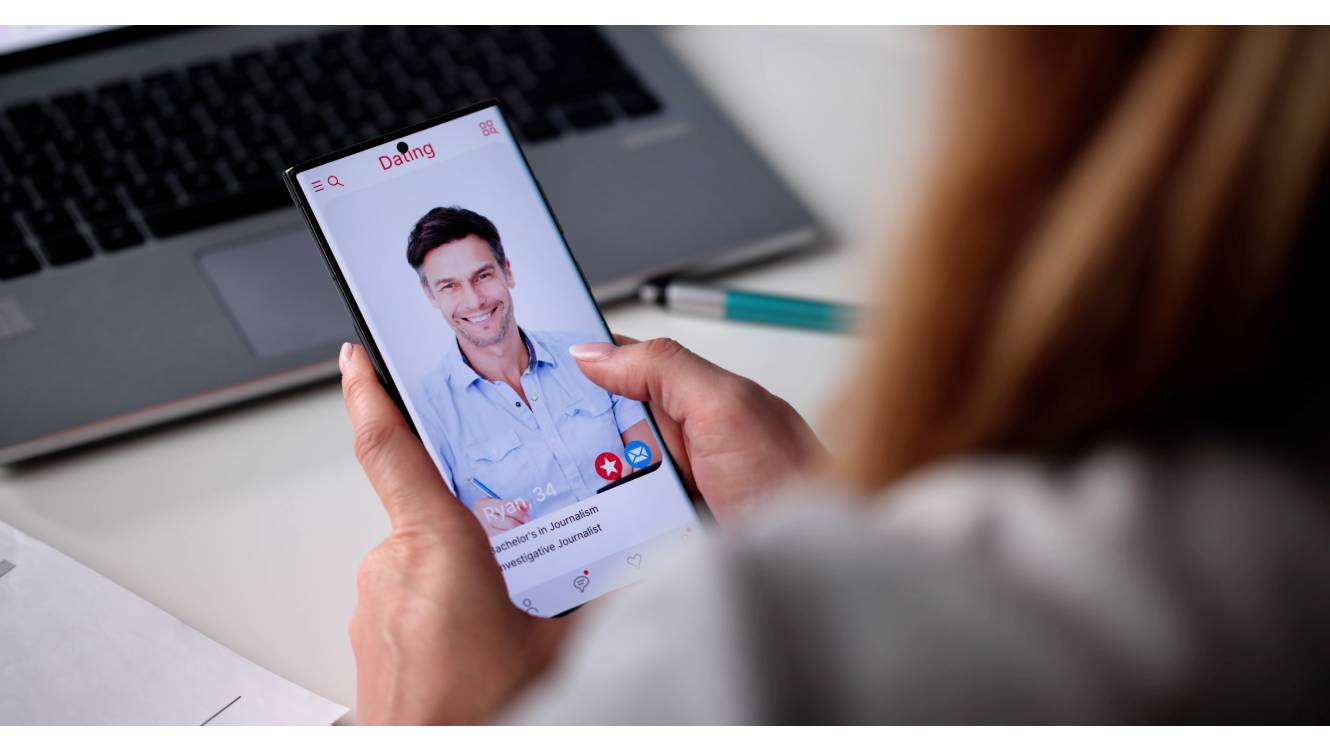
A scammer trying to get victims to send money
Image credit: Shutterstock/ Ground Picture

The common lies and cover stories

Fraudsters often use a set of convincing lies to build a believable backstory.

Lloyds says it identified the most common occupations and excuses they use based on reports from its customers:

  • Military personnel: Claiming to be a soldier stationed overseas creates a respectable image while providing a ready-made excuse for being unable to meet. Lloyds points out that around 96% of UK regular forces personnel are actually stationed in the UK (as of April 1 2024). 
  • Oil rig workers: This is another frequently used cover, as it explains poor communication and an inability to travel. Data shows that in 2022 only 3.4% of offshore oil rig workers were female, making a female oil rig worker an unlikely scenario. 
  • Doctors or engineers abroad: Posing as a professional on a humanitarian mission or a major international project adds a layer of credibility and, again, makes meeting in person difficult. 

Once trust is established, the requests for money begin. The most common reasons given include paying for urgent medical treatment, covering travel expenses for a visit, or settling unexpected legal or business fees. 

How to spot the signs and protect yourself

Fraudsters thrive on making their target feel special, often exploiting a period of loneliness or a recent life change such as retirement or bereavement. Being aware of their tactics is the best defence.

Detective Superintendent Oliver Little, from the City of London Police, said: “Romance fraudsters are highly manipulative and often operate with chilling precision – coercing victims through emotional control, false urgency, and elaborate lies. If you’ve met someone online, stay within the app’s messaging platform, be wary of requests for money, and speak to friends or family before making decisions.”

Liz Ziegler, fraud prevention director at Lloyds, offered a clear warning. “Never in any circumstances, send money to someone you’ve met online,” she said. “No good relationship starts off in this way, and there aren’t many valid reasons in 2025 why someone can’t speak to you on the phone.”

  • Read more about how to spot a romance scam.

Five tell-tale signs of a romance scam: 

  1. They declare love too quickly: Scammers work fast to build an emotional bond. Be cautious of someone who professes strong feelings after only a short time. 
  2. They won’t meet or video call: They will always have an excuse, whether it’s a broken camera, poor connection, or a strict work posting. 
  3. They ask for money: This is the ultimate red flag. They will create a sense of urgency or guilt to pressure you into sending money. 
  4. Their story is inconsistent: Details about their life or background might change over time. If something feels off, it probably is. 
  5. They try to isolate you: They may encourage you to keep the relationship a secret or react negatively if you mention talking to friends and family

A practical step: Check their picture

A simple way to check if a profile is genuine is to do a reverse image search of their photos. You can do this for free using search engines like Google or TinEye. Save their profile picture and upload it to the search tool. If the image appears on other websites under a different name, or on stock photo sites, it is almost certainly a fake profile.

What to do if you think you’ve been scammed

Realising you might be the victim of a scam can feel devastating, but it’s important to act quickly and not to feel ashamed or embarrassed. These criminals are convincing and target people from all walks of life.

  1. Stop all contact immediately: Cease all communication with the person and do not send any more money. Block their profile. 
  2. Contact your bank: Call your bank or building society right away. If you have sent money, they may be able to stop a transfer or recover the funds. If you have made a payment via Faster Payments or CHAPS from one UK bank account to another, you should be covered by “authorised push payment” rules that mean you will be refunded, as long as you have not been “grossly negligent” (which might include ignoring specific warnings). If you’ve sent money to a foreign bank account or bought vouchers, you won’t have the same protection. 
  3. Report it: Report the scam to Action Fraud online or by phone. This helps the police to build a picture of the fraud and can prevent others from becoming victims. 

If you are in doubt about someone you have met online, always talk to a trusted friend or family member. They can offer an objective perspective and provide the support you need.


Sign up to hear more from Saga Money

Sign up to hear more from Saga Money

Get the latest updates from Saga Money direct to your inbox. Our emails feature money news, helpful tips and special offers.

Fields marked with an * are mandatory.

Please enter a valid first name
Please use only letters
Please enter a valid last name
Please use only letters
Please enter a valid email address
Please use a valid email format
Unfortunately there has been an issue processing the form, please try again.

By providing your details you will receive emails with related content and offers from Saga Money.

For information about how we use your personal information, please view our Privacy Policy

Related articles

Man looking glum with his chin resting on his hand
How to spot a romance scam
Thoughtful confused mature woman concerned thinking about online problem looking at laptop.
How to spot an investment scam
Chat messages in laptop of an old woman. Love fraud scam of catfish. Elder person in online conversation with family. Grandma group messaging. Communication in social media. Customer support chatbot.
New bank refund rules finally land – but are you protected?
A mature male sitting in a sofa looking out the window looking worried holding his phone
The latest text message scams
Two people in a kitchen hugging and smiling
Saga brand logo

Saga Money

Serving the personal finance needs of the over 50s for more than 20 years.

Find out more

Money news

Browse money news
A person holding a smartphone
Life insurance warning: beware fake calls and emails
How to not got caught out by this rising scam.
Unhappy older woman sitting on couch, holding smartphone feels frustrated and concerned, received upsetting text message.
AI-driven scams: How to keep your money safe in 2025
Arm yourself with the knowledge to safeguard your savings. 
A man on the phone, looking slightly worried
Latest holiday scams: avoid getting hit by fraud this year
Criminals want your holiday money – know what to look out for. 
An older man and woman sat on a sofa looking at laptop together and smiling
Keep yourself safe this Black Friday: 7 tips to avoid scams
Want to make sure you avoid any Black Friday scams? Tips from money experts on staying safe in 2025.
1951
Saga logo
Our company
  • About us
  • Careers
  • Investor relations ↗
  • Newsroom ↗
  • Shareholder services ↗
  • Corporate ↗
Our products
  • Savings
  • Mortgages
  • Equity release
  • Legal services
  • Investments
  • Money news
More from us
  • Exising Savings customers
  • Existing Investment customers
  • Support services
  • Hear more from us
Other information
  • Cookie settings
  • Cookie policy
  • Privacy policy
  • Terms and conditions
  • Modern slavery statement
  • Gender pay review
  • Customer reviews policy
  • Sitemap
Contact us
  • Contact us
  • Make a complaint
  • Log in to MySaga
x icon Facebook icon

Saga Money is a registered trading name of Saga Personal Finance Limited, which is registered in England and Wales (Company No. 3023493) and is authorised and regulated by the Financial Conduct Authority (FCA No. 178922)

Registered office:
3 Pancras Square, London, United Kingdom, N1C 4AG
© Saga 2026