Craig Revel Horwood: "I was rather sniffy about panto"
The Strictly judge never understood Britain’s love of pantomime. Then he stepped on stage as the Wicked Queen and began a love affair that’s lasted 17 years.
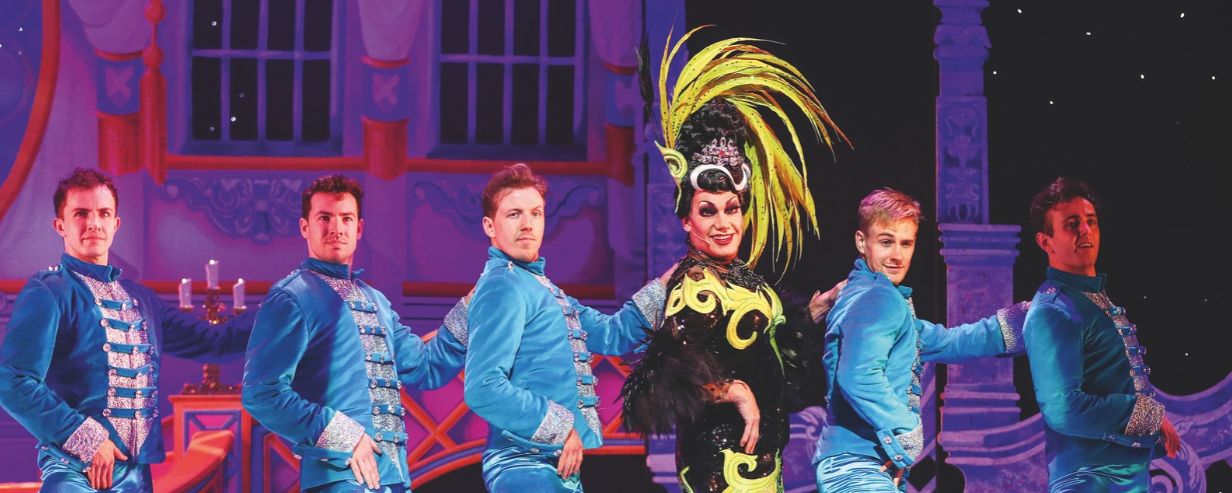
In December 2009, in the somewhat unlikely setting of Llandudno in North Wales, I had a life-changing experience. I was playing the Wicked Queen in the pantomime Snow White and the Seven Dwarfs at the Venue Cymru theatre, and I found myself falling in love. The result has been one of the most fruitful and joyful relationships of my life, and one that endures to this day. And the object of my ardour? Pantomime itself.
As with all the best love stories, I wasn’t expecting lightning to strike. Indeed, I was rather sniffy about panto. I’d grown up in Australia, where there is no pantomime tradition, and I was entering a world I didn’t understand. I had little appreciation of the art form, and instead had taken to heart the rather lazy and outdated trope of panto as a low-rent, amateurish production peopled by has-been celebrities in search of a last payday.
Instead, what I encountered all those years ago in Wales was a thriving, dedicated and creative company of people performing in a hugely entertaining production to lively and rapturously entertained audiences. I was hooked. I’ve performed in panto every year since.
Last year, I decided it was high time I studied its history, and ended up becoming so immersed I wrote my own book, The Book of Panto. The word ‘pantomime’ comes from the Ancient Greek word pantomimos, meaning ‘imitator of all’, used to refer to individual performers who used mime to entertain an audience, sometimes with a musical backing.
The evolution of the art form owes much to Shakespeare, whose use of stock characters such as the jester, the hero, the villain and the comedic duo is replicated in panto. His brilliant wordplay, multi-layered jokes, love of innuendo and topical gags are also notable panto features.
Around the same time, the commedia dell’arte was in vogue in Italy, with emphasis on improvisation and gender-role subversion, and its inclusion of jokes relating to current affairs. Modern pantomime can trace its roots directly to the movement, via the rich music hall tradition of 19th-century Britain. But for all its tradition, panto came close to dying out in the 1960s and 1970s.
The trope that I had initially adopted – of lazy, hackneyed scripts performed by washed-up celebs – came from this era, when the art form was firmly in the doldrums. Many of the jokes and stereotypes were outdated, and the productions lacked the inclusivity and generosity of today’s versions.
But that began to change in the 1980s, when a handful of visionary producers started a process of modernisation, introducing high production values, bespoke scripts, diverse casting – bringing credibility back to pantomime.
By the turn of this century, organisations such as Qdos (now Crossroads) had taken up the baton, and modern pantomime as we know it was thriving.
The Book of Panto, by Craig Revel Horwood, RRP: £18.99 (Faber & Faber)
Read the rest of this article, absolutely free on the Saga Magazine app. You’ll get unlimited access for 3 months – enjoy the current edition, daily articles from our website plus interactive games and puzzles.
These engrossing novels and fascinating non-fiction picks are the perfect summer escape.
Dr Mark Porter dives into the health issues affecting us all in the new podcast from Saga.
The celebrity historian shares her travel stories and disasters.
The BBC newsreader on running 23 marathons, coping with grief and why she’s still chasing new challenges at 58.
The writer and broadcaster on childhood adventures, Winnie-the-Pooh and the lesson that has guided him.
The TV presenter shares her favourite places and the surprising companion she would love to travel with.
TV’s Dr Hilary Jones on why he wants sweeping reform to modern healthcare.