Monty Don on 9 ways British gardening is unique – plus win his new book!
The Gardeners’ World presenter digs into the secrets of British gardens, discovering a culture unlike any other, shaped by weather, history and mass participation.
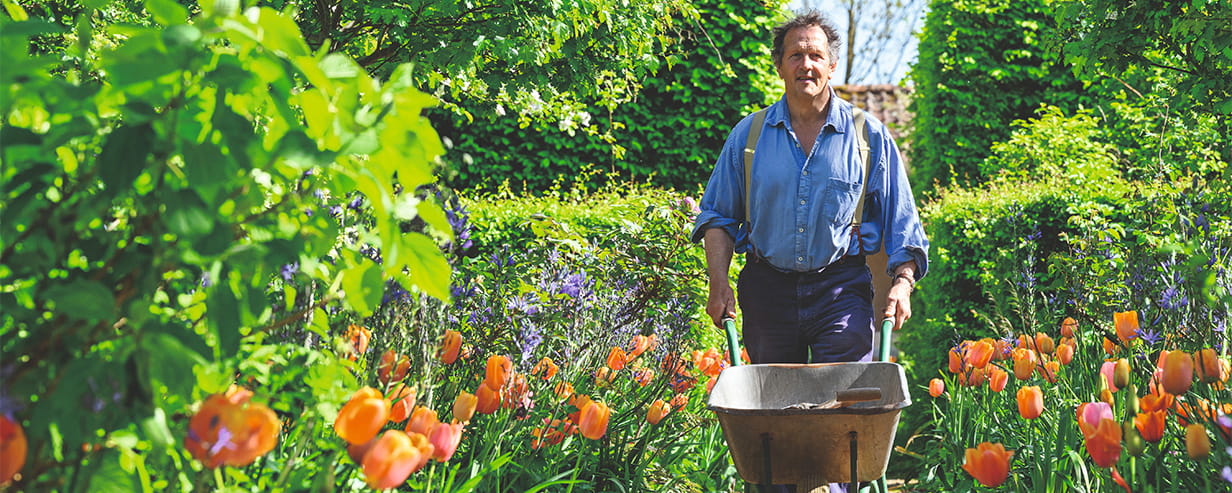
The Gardeners’ World presenter digs into the secrets of British gardens, discovering a culture unlike any other, shaped by weather, history and mass participation.
Long before Monty Don attained the status of nation’s head gardener, as lead presenter of Gardeners’ World for more than 20 years, he found fame as a nomadic reporter-for-hire. He trotted the globe for the Holiday programme of the 1990s, skewering the clichés of foreign cultures for a British audience hungry for travel experiences.
After taking the helm of Gardeners’ World in 2003, it was a natural step to pick up his passport once more and create the landmark series Around the World in 80 Gardens, where he explored what gardens tell us about the attitudes, history and ambitions of his hosts.
A huge hit with the audience, from this success has flowed a further eight award-winning global travel series exploring garden-making from Italy to Japan, America to Iran and, most recently, down the length of the Rhine – and finding the culture within horticulture.
However, turning the cameras onto British gardens was never the plan, he admits. Too familiar.
“The whole point of these series is to come at the subject as an outsider,” he explains. “So it genuinely hadn’t dawned on us to film British gardens like that, because it’s like a home game – too difficult to be objective.”
While he’d visited hundreds of British gardens in the past, the prospect of doing it across a broad canvas, taking the pulse of the country, post-Covid, to uncover if we’re still a nation of gardeners – and why – was too tempting to resist. Over two years of filming, travelling to every corner of our four nations, Monty and his team created an ambitious five-part BBC series and a gloriously illustrated book, simply titled British Gardens, to accompany it.

“One of the hardest things is that good British gardens tend to be good in a similar way,” he says. “It’s not hard to find beautiful gardens. But a beautiful garden alone doesn’t necessarily have a story. So that was our motivation – what IS a British garden, if such a thing exists?”
Along the way, he returned to familiar haunts but the greatest joy, he says, was finding new ideas and inspiration in unfamiliar places – from community gardens in sectarian Belfast to modern reinterpretations of gardening in a world of climate change.
“You know, these trips get harder, over time,” he admits. “So what is it that stops us in our 70s saying, ‘No, we’ve done it now, we’ve had enough?’ It’s the fascination – and the fun. Learning something new is always life-enhancing and the older you get, the more life-enhancing it becomes.”
And Monty’s biggest learning, from his travels around British gardens? That no one gardens like the British. Read on to find out why...
“What struck me most, looking at Britain as objectively as possible, after all the gardens I’ve visited across the world, is that we have a gardening culture unlike anywhere else on Earth. Yet we tend to be rather inward looking anyway about our gardening and regard it as normal – we don’t realise how abnormal we are. It is genuinely different in scale, attitude and passion from anywhere else I’ve travelled.”
“We are extraordinarily lucky. Our weather is benign. It’s rarely too hot, rarely too cold – we think it’s cold if it gets to -4° or -5°, and that is just nothing. In my series on Spanish gardens, I went to the middle of Spain where they’ll have two months of -15 to -20°, and then two months of plus 50° in the same garden. At one place I visited, they were reduced to about seven plants that could survive that weather – but they made a garden.
“It just brought home to me just how soft our conditions are. And although we complain endlessly about the rain, it means things grow. Put a plant in the ground and, eight times out of ten, it thrives. It makes gardening easy, and because it’s easy, people do it – and it’s rewarding.”

“In our very class-ridden society, gardening is pretty much classless. And that’s really significant. We have so many subtle ways that reveal our class distinctions, from where you went to school, how you hold your knife – but gardening cuts across that and I can’t think of another country where that’s true.
“The analogy is football – if you’re a duke or a dustman, you can share exactly the same emotions and experiences. Not much else in life does that, but our gardening fundamentally does.”
“The idea of the English garden isn’t so much about status as about longing. It goes back centuries, to when Britain became an urban, industrial nation and people yearned for a version of Arcadia.
“It’s a nostalgic, sentimentalised fantasy of our idea of what heaven is going to be like, based upon an English countryside full of meadows and wildflowers – which in reality arose out of poverty and farming collapse. So gardens became our way of imagining a better world, even if that world never existed.”
“At the French Revolution in 1789, 80% of French society was agricultural, but it was just 30% in Britain. Our revolution, from the 1730s, 1740s, was industrial – creating by Victorian times, this big, urban middle class with gardens, while the working classes were growing on allotments. So you had access to land, if not the land.
“At the same time, the expansion of the British Empire meant we were bringing in a huge range of plants from all over the world and finding they would grow here.”
“Over 80% of us in this country have access to a garden – that’s what makes us such an extraordinary nation of gardeners. And where people don’t, they invent alternatives – alleyways and allotments, community plots, graveyards and borrowed corners of land. The desire to grow things here will always express itself in new and creative ways.”

“I always asked people in the series what they thought a British garden was and, in the end, they all said it’s about gardening not the finished article. And that differentiates us from almost everywhere else I’ve been in the world where the process is a means to an end, with the end being a beautiful garden.
“For the British, almost exclusively, the process is more important than the end. So you can love your garden and be regarded as a good gardener, yet still have a horrible garden – and everybody knows it’s a horrible garden!”
“There is a kind of a moral virtue, in Britain, in doing it yourself. If you can grow things really well and you don’t pay someone else to do it, somehow that thing you’re growing is made better as a result. We take that for granted – it’s not true worldwide, where a garden is no less beautiful or admirable if created or maintained by someone else.”
“Good British gardens tend to be good in a similar way – thanks to our climate and culture. Because we value plants over design and can grow a wide diversity from all over the world due to our climate, flowering plants dominate our gardens like nowhere else. Whether in a stately home or tiny back garden, it’s all part of the fantasy we invest in our gardens.”
For your chance to win one, email your name and address to editor@saga.co.uk with “Monty Don Book” in the subject line.
(Hero image credit: Jason Ingram - Immediate Media)
Find out about Saga's Gardening holidays here...
Explore stunning outdoor sanctuaries on Saga’s garden-themed getaways – it doesn't matter if you’re a keen horticulturist or just someone who enjoys colourful blooms.
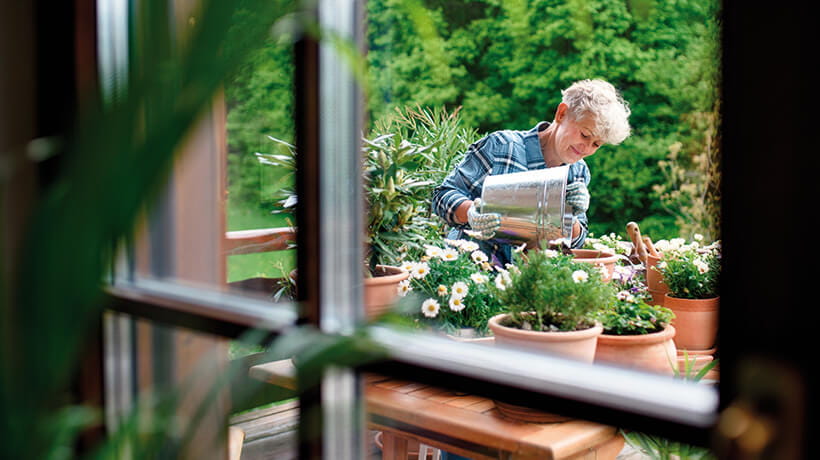
Saga Home Insurance comes with garden cover included. Find out what’s included and get tips to help secure your garden.
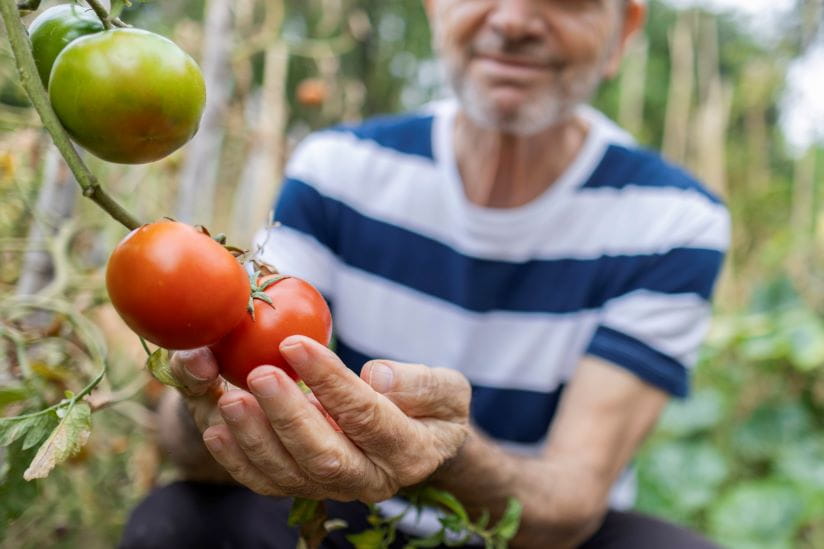
Rekha Mistry shares her top vegetables to grow in your garden all year round.

We explain the science and have 7 of the best scented plants for your garden.
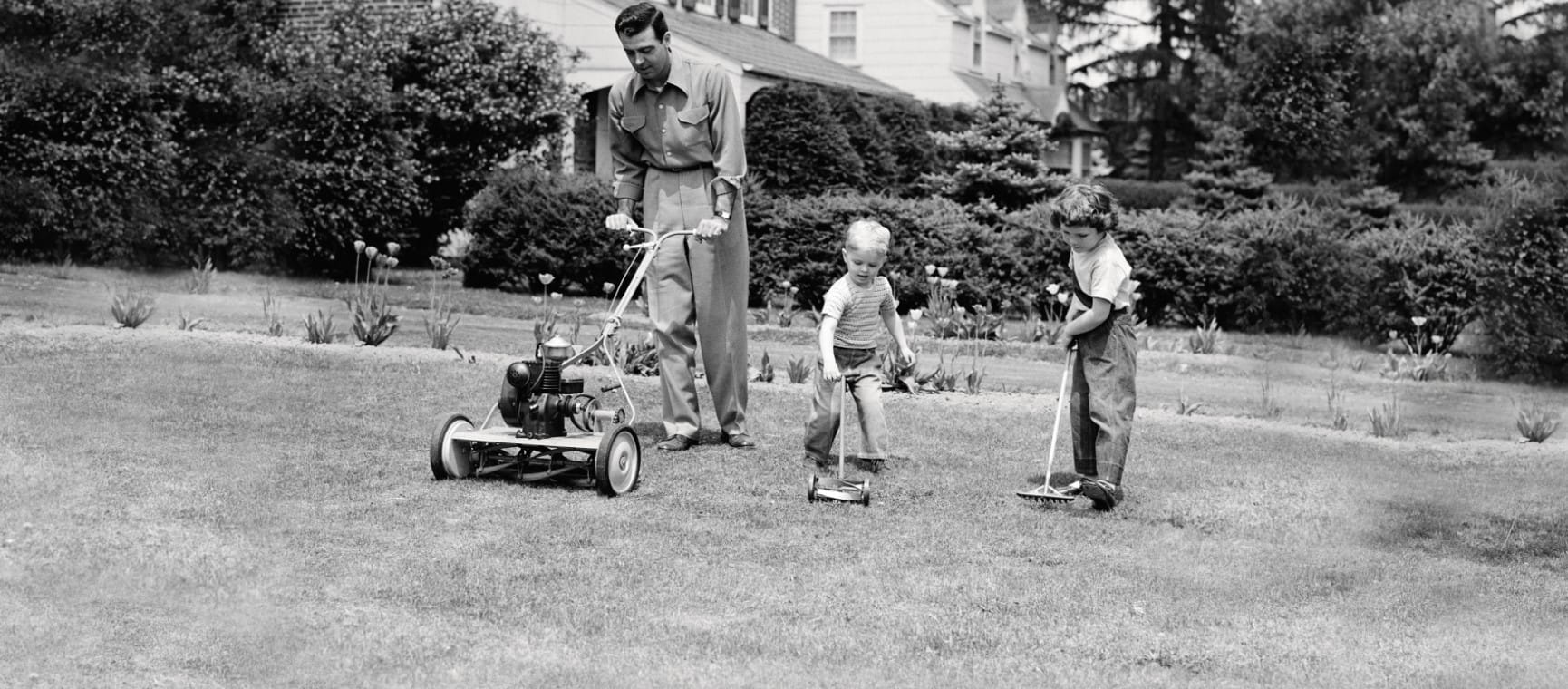
From robot mowers to electric pruning shears, spruce up your outside space with four of the best garden gadgets
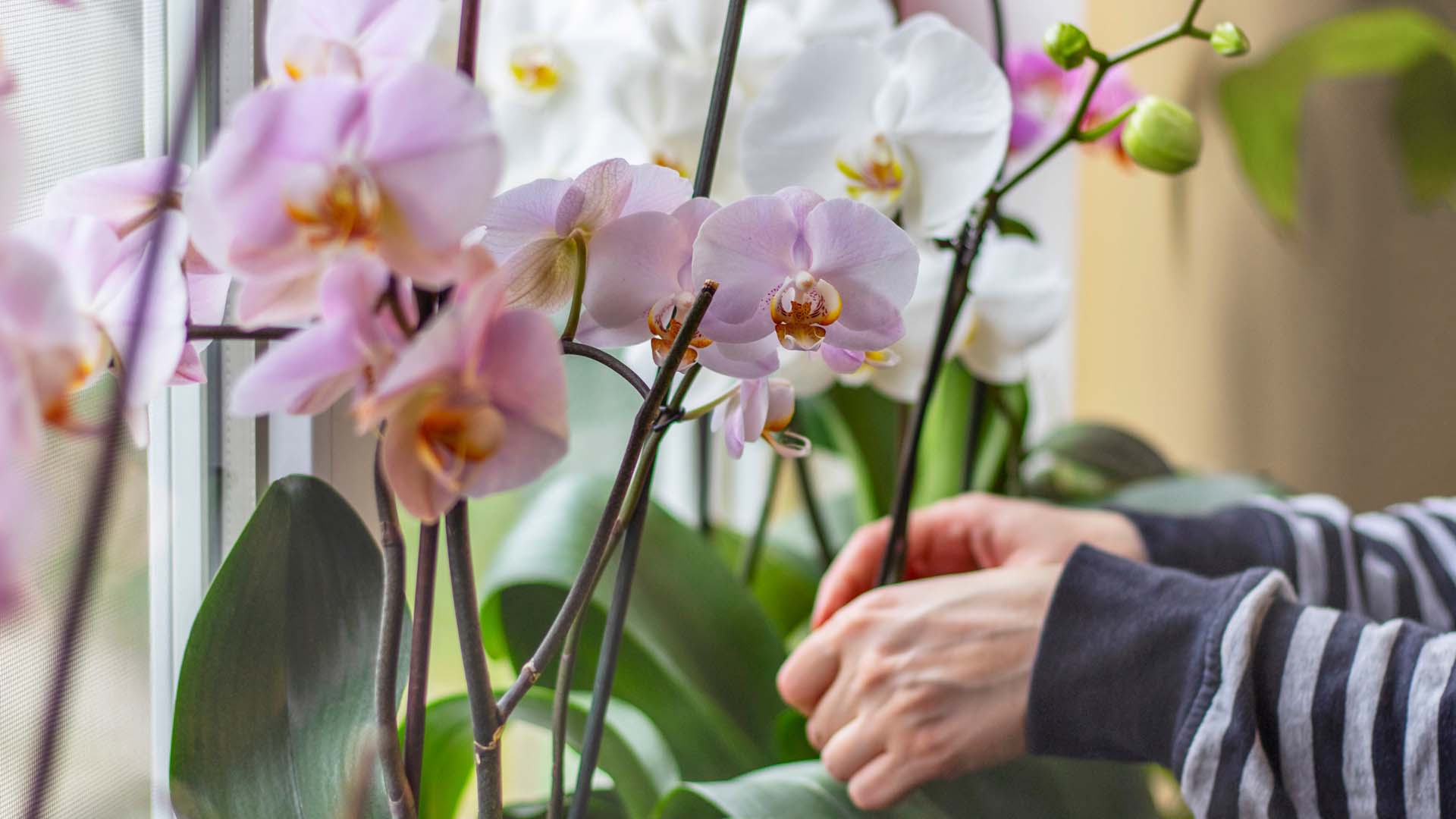
Our expert pruning and watering hacks include a top tip to keep them flowering from Alan Titchmarsh.

The experts explain the best ways to look after our feathered friends.
Blighted by buzzing? How to keep wasps out of your garden without harming them so you can enjoy the summer.
Expert advice on how to avoid neighbour disputes, fines or even prosecutions.
Everything you need to know about Japanese knotweed, the fast-growing plant nobody wants in their garden.