Can playing tennis really help you live longer? What the science says
From a healthier heart to a sharper mind, playing tennis could do far more for your body and brain than you might expect.
Getty
From a healthier heart to a sharper mind, playing tennis could do far more for your body and brain than you might expect.
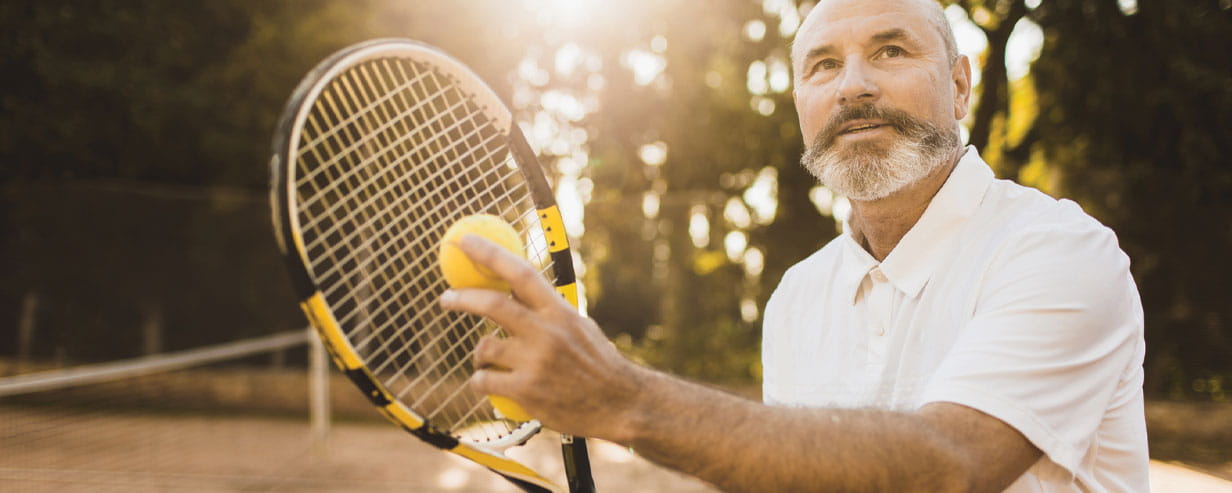
As Wimbledon returns, playing tennis might feel like an appealing way to spend the summer – but it could also be one of the best things you can do for your long-term health.
You may not have Novak Djokovic’s flexibility or Aryna Sabalenka’s power, but the health benefits of tennis could be far greater than you might think.
According to science, tennis may be one of the best activities we can do for our health. This year a study in BMJ Medicine of more than 110,000 adults linked racquet sports to a 15% lower risk of death, while a major Danish study in 2018 found that tennis players lived almost a decade longer than people who did no exercise at all, outperforming runners, swimmers and gym-goers.
So, what makes tennis so powerful?
“Tennis requires a combination of technical, tactical, physical and mental skills,” says Jonny Fraser, senior lecturer at the School of Sport and Physical Activity at Sheffield Hallam University and a former tennis coach.
Every point demands speedy thinking, lightning reactions and sharp coordination, all while your muscles are working hard.
“Tennis involves short, energetic bursts, followed by periods of lighter activity,” explains Dr Denise Roche, an exercise and health physiologist in the School of Health and Sport Sciences at Liverpool Hope University. It resembles high-intensity interval training (HIIT).
Having an elevated heart rate during play strengthens the heart muscle, making it more efficient and lowering blood pressure. Alternating bursts of high energy and rest also teach our heart to bounce back faster after effort, boosting our heart rate recovery. The quicker our heart slows down after exercise, the fitter and healthier our cardiovascular system. People whose heart rate drops quickly after exertion are generally at much lower risk of heart disease and early death.
The health benefits, Roche says, extend beyond the heart to our arteries. Tennis triggers the vessel walls to become wider, more elastic and more responsive to blood flow. Healthy arteries allow blood to flow easily around the body, reducing strain on the heart and lowering our risk of serious conditions like heart attacks and strokes.

Because of its similarities to interval training, tennis can help people manage Type 2 diabetes, says Roche. This sort of exercise improves how the body controls blood sugar and responds to insulin.
Tennis pushes our muscles to use glucose for energy and then gives them short recovery periods to reset. During the hard bursts, our muscles pull glucose out of the bloodstream very quickly, even without needing as much insulin.
Over time, this improves insulin sensitivity, meaning our bodies become better at using insulin properly.
From the age of 30, we start to experience sarcopenia: we lose muscle mass. The process accelerates between the ages of 65 and 80. Sarcopenia contributes to frailty and falls.
Tennis players tend to have better upper and lower body strength and muscular endurance compared to healthy non-players. “Tennis may well allow you to keep your independence,” says Roche. “Regular play might strengthen your grip, helping you to do everyday tasks like opening jars. It may also keep you agile, so you’ll find it easier to move more or just get up from a chair.”
Tennis helps with grip by strengthening what experts call the kinetic chain. “Every movement tends to originate from your core, before going out to the limbs and eventually the wrist,” says Roche. Your body moves as a linked system.
Like any racquet sport, tennis also improves coordination, balance and strength. “It requires efficient movement, including the ability to accelerate, change direction, stay balanced and generate force quickly when striking the ball,” says Fraser. Tennis helps the body stay agile and resilient.
All the stopping, starting, swivelling and striking in tennis put healthy stress on the bones, prompting the body to strengthen and reinforce the skeleton over time.
The impact of the ball on the racquet also sends small vibrations through the arm and into the skeleton, adding another layer of stimulus that may support bone strength. “The shockwaves stimulate the building of bone tissue,” says Roche.
“The muscles and tendons undergo and adapt to stress, so they’re made stronger, too. This may well increase bone density, especially in the dominant arm.”

A significant benefit of tennis is neurological. Every rally demands that we read our opponent, anticipate the ball, calculate angle and pace, and choose a shot, all in fractions of a second. “Tennis is an amazing sport for problem-solving and decision-making,” says Fraser.
A 2025 analysis of 32 clinical trials found that, among the approaches tested, the most reliable gains in thinking and memory for people with early cognitive decline came from exercises that demanded both physical and mental effort simultaneously. Tennis is a great example. The body is moving hard, while the mind is tracking, predicting and deciding where you should go next. Every rally is different, so the brain can never switch off.
The stop-start bursts in tennis can also increase levels of BDNF, say experts, a protein that helps the brain grow new cells and strengthen its wiring. Because you’re constantly tracking the ball, moving, deciding and reacting, lots of different brain areas switch on at once. Over time, this helps keep the brain more flexible and adaptable, increasing the brain’s neuroplasticity.
Tennis may even help maintain the brain’s myelin, the insulation around nerve cells, which keeps signals firing quickly.
“Tennis can provide important social benefits,” says Fraser. “Often, friendships develop within tennis clubs and you’ll feel part of a community.” These ties mean you’re more likely to stick with it. Social connection is also linked to people leading longer, healthier lives.
The good news is that tennis really is for everyone. “It’s never too late to start,” says Fraser. To see the health benefits, aim for two or three sessions a week, of 45 minutes to an hour each. Speak to your doctor first if you have a high risk of having a heart attack or stroke and don’t throw yourself into a rigorous tennis schedule too quickly.
If you want to make tennis especially social or your fitness levels aren’t quite up to a singles game, doubles is a good option. “Although doubles is usually less physically demanding, the game still requires players to change direction, maintain balance, anticipate opponents’ actions and make decisions,” says Fraser. You get the cognitive and much of the cardiovascular benefit – you just cover less ground.
If this sounds exhausting, try walking tennis, played on a shorter court with an underarm serve and, as the name suggests, no running. You still have to read the game, track the ball and make tactical decisions. Find a venue near you through Age UK or the LTA.

Some Saga holidays include soothing or spiritual activities like joining a traditional tea ceremony in Japan, practising yoga in India or bathing in Iceland’s Blue Lagoon.

Health insurance for people over 50 that provides a quicker route to diagnosis and planned medical treatment in a private facility.
Underwritten by Bupa Insurance Limited.

We examine the science and how to best look after our brain as we get older.

Want to start winter mornings feeling energised? Follow these five simple tips.

Expert nutritionists break down the most important foods to eat in each decade as we get older.

Your neighbourhood pharmacist now offers a surprising number of services.



10 simple alternative items that can have a big effect on your health – without depriving you.


New measures for GP appointments are in the headlines, but what effect will they have for you when it comes to getting to see a doctor?

Everything you need to know about the lung infection, and how you could be ill with “walking” pneumonia without realising it.