How to live well with type 2 diabetes
Diabetes care is undergoing the biggest shake-up in a decade. We explain all the latest medical advice – from glucose monitors to oral health and lower carb diets.

Diabetes care is undergoing the biggest shake-up in a decade. We explain all the latest medical advice – from glucose monitors to oral health and lower carb diets.
Recently diagnosed with type 2 diabetes (T2D) or perhaps you’ve been living with it for years? You’re not alone. More than a third of the 4.4 million people in the UK with the condition are over 65, according to Dr Faye Riley at Diabetes UK.
People with T2D have a higher risk of disability, frailty, muscle weakness and loss. But as Dr Riley says, “There has been little research to understand or address the specific challenges people face as they grow older.”
Excitingly, this is now changing. In the biggest shake-up of diabetes care for a decade, the government’s treatment watchdog NICE (the National Institute for Health and Care Excellence) published new draft guidance. It recommends wider use of newer drugs called SGLT2 inhibitors, rather than starting everyone on the same traditional first-line treatment, metformin. SGLT2 inhibitors lower glucose while also protecting the heart and kidneys and are often under-prescribed in older people.
Douglas Twenefour at Diabetes UK says that the new guidance should be transformative: “Most people aren’t currently taking the most effective medication for them, which puts them at risk of serious complications.”
But you don’t have to wait for the new guidance to reach GPs to take charge of your diabetes. “You have to actively seize the initiative,” says Professor Nick Wareham, co-director of the Institute of Metabolic Science at the University of Cambridge. “It’s not about overhauling your whole life overnight, but by making small, achievable choices you can control and potentially reverse diabetes.”
Rury Holman, emeritus professor of diabetic medicine at the University of Oxford, agrees: “Type 2 diabetes used to be a terrible sentence, but nowadays most people can live long, healthy lives without major complications. The key is control. We should focus not just on living with diabetes, but on living well with it.”
How might that look? Here are our experts’ top ten recommendations.

Taking medication to lower blood glucose to near-normal from the start is vital, says Professor Holman, who led the landmark UK Prospective Diabetes Study (UKPDS), which began in 1977.
“At that time, people thought diabetes complications were inevitable,” he says. “We showed that wasn’t true.”
The UKPDS findings transformed diabetes treatment and have left a lasting legacy. “More than four decades later, we see that early treatment results in fewer heart attacks, fewer complications of the small blood vessels serving the eyes, kidneys and nerves, and a lower risk of dying early,” says Professor Holman.
The body seems to retain a “memory” that maintains protection even if blood sugar levels subsequently creep up.
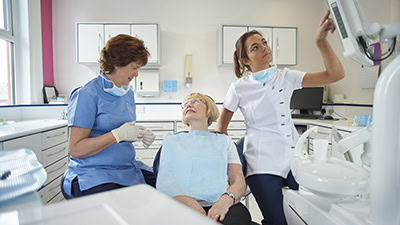
Diabetes and oral health are closely linked and it’s a two-way street. High blood sugar causes dry mouth and more sugary saliva, increasing gum disease risk. Gum disease in turn raises blood sugar.
A review in Frontiers in Clinical Diabetes and Healthcare found that treating gum disease with medication such as doxycycline (Periostat) improved insulin sensitivity and reduced inflammation.
New curcumin-based treatments also show promise.
Around half of those with T2D develop diabetic retinopathy, which damages light-sensitive cells in the back of the eye and can lead to blindness. But new research offers hope.
A recent study found that retinal cells exposed to high glucose survived twice as long when treated with the anti-diabetic, anti-obesity drug semaglutide (the main ingredient in weight-loss jabs). Clinical trials are needed and the mechanism is not fully understood, but it’s probably a mix of better glucose control and antioxidant effects.
Associate Professor Alex Day, consultant ophthalmologist at Moorfields Eye Hospital, says, “Everyone with type 2 diabetes should have regular retinopathy screening. It’s one of the best ways to prevent sight loss.”

Exercise doesn’t have to mean joining a gym or running a marathon. Even light daily activity makes a difference, according to a Danish study of more than 11,000 people. It found that gentle daily movement reduced the risk of heart attack and stroke by 23% and early death by 27%.
Naveed Sattar, professor of cardiometabolic medicine at the University of Glasgow (who was not involved in the study), says: “Activity burns fats, keeps muscles in shape and makes blood vessels more pliable.”
Professor Wareham, who has studied physical activity and metabolism for decades, adds: “The best exercise is the one you’ll keep doing. Even everyday things – walking, taking the stairs, moving around the house – can help.”
Adding resistance training – using weights, bands or weights machines – can improve strength by around half as well as help lower HbA1C, a key measure of your long-term blood sugar.
Shedding even a few kilos can dramatically improve blood sugar control and in the early days of type 2 diabetes could reverse it for at least five years.
“On average, the pancreas’s insulin-producing beta cells decline by about 4% a year,” says Professor Holman. “Losing weight lowers demand and reduces insulin resistance [when the body can’t use the insulin it makes] so the insulin you have goes further.”
What to eat? A 2024 US study found that a low-carbohydrate diet improved the function of beta cells, helping people make more insulin naturally. However, as Professor Wareham cautions: “There’s no one miracle diet – although more vegetables, less meat and processed foods are better. It’s not very exciting but it is sustainable.”

The small sensors – continuous glucose monitors (CGM) – sported by celebrities and others on the upper arm have revolutionised diabetes care, tracking blood sugar and revealing the effects of food, sleep and movement without the hassle of finger-prick testing.
AI-enhanced CGM go further, predicting highs and lows before they happen. Some even link to insulin pumps through “hybrid closed-loop” systems, acting like the brain of a virtual pancreas, to adjust insulin.
Strict rules govern who can get CGM for T2D, but Dr Riley says: “Access should be based on clinical need, not diabetes type”. Diabetes UK is funding research to see how CGM could help many more people.
Four out of ten people struggle with depression after a diabetes diagnosis, which can worsen blood sugar control. “We need to treat people holistically,” says Professor Holman. “There shouldn’t be a divide between physical and mental health.”
Ask your diabetes doctor or nurse about local support or if you can self-refer. Staying connected and engaged, whether by volunteering, walking with friends or joining a group, can really help.
Signing up to a DESMOND (Diabetes Education and Self-Management for Ongoing and Newly Diagnosed) course is a smart move. A 2025 Irish study found that participants in the programme – which runs face-to-face and virtual group sessions – had better blood sugar control, lost weight and had lower BMI six months afterwards.
Diabetes UK is funding projects to make DESMOND even more effective, including developing digital tools.
Find your nearest DESMOND course.
The NHS also offers a free online service called Healthy Living to help manage T2D.

Keeping on top of heart risk factors, such as blood pressure (BP) and cholesterol, is vital. “The UKPDS showed that reducing blood pressure to near normal avoided many risks, like stroke,” says Professor Holman. Buy a home BP monitor and monitor the readings. If they’re high, seek treatment. Track cholesterol too.
“Oral statins or newer injectable cholesterol-lowering medication can cut cholesterol by half and greatly reduce the risk of heart attack or stroke,” says Professor Holman.
T2D research is moving quickly. Diabetes UK is funding an AI-driven study at Swansea University to develop an app to measure strength, balance and aerobic capacity to enable more individual treatment.
Meanwhile, Birmingham University is looking at how on-screen prompts could help GPs spot kidney damage in older people with T2D. The future for those living with type 2 diabetes has never been brighter.
Visit Diabetes UK for comprehensive info and advice.
Tune in to Diabetes Discussions, a podcast from Diabetes UK available wherever you get your podcasts.
Read Aging Well with Diabetes – A 10-Point Action Plan for Older Adults by Medha Munshi and Sheri Colberg (Johns Hopkins University Press, RRP £19.99). American but full of useful information.
(Hero image credit: GettyImages)


Buy direct and start a new Saga Health Insurance policy by the end of 10 December 2026 to get your first 3 months free. T&Cs apply.
Underwritten by Bupa Insurance Limited.

Some Saga holidays include soothing or spiritual activities like joining a traditional tea ceremony in Japan, practising yoga in India or bathing in Iceland’s Blue Lagoon.

Are you retiring at the wrong age? The best age to retire for your body, brain, happiness and pocket.


Everything you need to know about the lung infection, and how you could be ill with “walking” pneumonia without realising it.

Strong calves for a strong mind: how they support our circulation and brain health, with easy moves to strengthen yours at home.


Our GP Dr Mark Porter explains what can cause itchy skin, which is a common problem as we get older.

Worried you’ve morphed into Victor Meldrew? Find out how to battle that bad mood, and what to do if you’re stuck with a grouchy loved one.

The benefits of heat and cold therapy, and how Nordic bathing won over our nervous writer.

Here’s how to spot the symptoms of heat disease and reduce your danger.


Everything you’re entitled to this year, when you can have it, and the gaps that remain.
Pilates for back pain – what to do if you are suffering, and five gentle exercises that could help.

Dizziness or vertigo: a sensation of spinning, can stop us doing everyday things for fear of falling. Try these tips to stop feeling dizzy


You don’t have to put up with bladder leaks. We try out the latest pelvic floor gadgets for men and women.

Cataracts are a normal part of ageing. Learn how to spot the signs – and when it’s time to consider surgery.