“I’m a physio and this is the best thing you can do if you’re in pain”
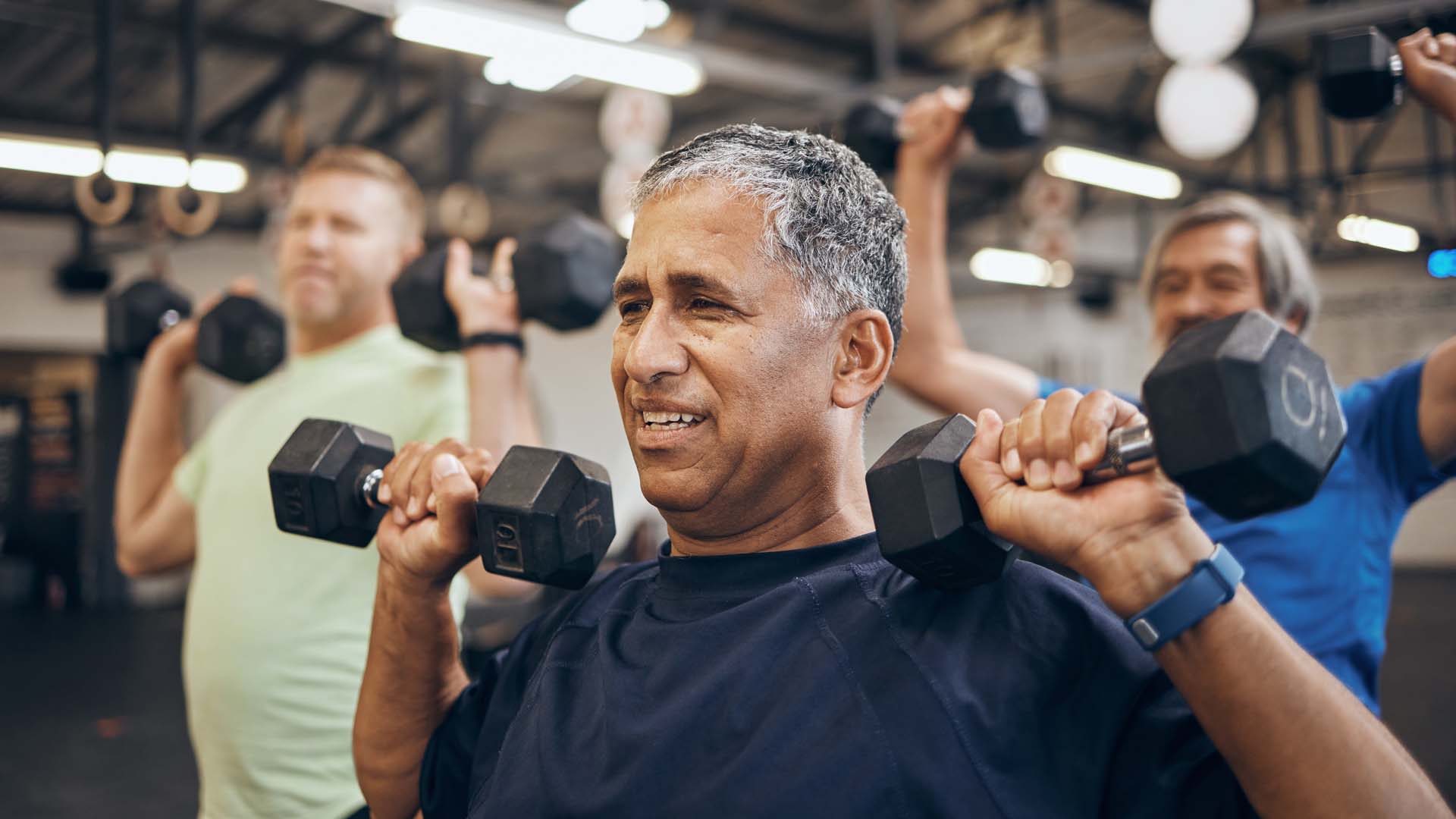
When something hurts, your instinct is to rest. But physiotherapist Phil Evans explains why it’s so important to keep moving.
Getty
When something hurts, your instinct is to rest. But physiotherapist Phil Evans explains why it’s so important to keep moving.
One of the biggest myths people over 50 have been told is this: “If it hurts, rest it.” Which sounds sensible.
After all, if your knee hurts, surely you should stay off it. If your back aches, surely you should sit down. If your arthritis flares up, surely the answer is to take it easy until things settle.
But the problem is that for many of the most common aches and pains we see after 50, too much rest is exactly what keeps people stuck.
As a chartered physiotherapist (Phil the Physio) who has spent more than 20 years working with people over 50, I’ve seen the same pattern repeat itself thousands of times.
According to Age UK’s 2025 State of Health and Care report, there are now more than 22 million people aged over 50 in England and almost six in ten people aged 55 to 64 say a long-term health condition affects their ability to carry out everyday activities. Yet many are still being given the same message they were given years ago: rest more and be careful.
I see the consequences of being told to rest more every week in clinic. After 40, we naturally lose around 1% of muscle mass each year, a process called sarcopenia. After 60, that rate accelerates to 2-3% per year.
But unlike cartilage, muscle comes back. Studies show that progressive strength training can slow and even reverse this process, at any age. Without it, as muscles weaken, joints lose some of the support that helps them cope with everyday life. Pain follows. Then the instinct to rest kicks in, which accelerates the very muscle loss that started the problem in the first place. Confidence drops. The joint becomes more sensitive. The pain gets worse. So, people rest even more.
Before long, they’re trapped in a cycle that has very little to do with arthritis and everything to do with the response to it. The good news is that cycle can be reversed.
Movement doesn’t have to mean pushing yourself in the gym – it can be as simple as a walk around the block.
If you haven’t done any exercise for years or are worried about a health problem or injury it’s always worth seeing your GP surgery to get checked out before you start getting active.
Build up your movement and confidence gradually with these simple exercises for beginners.

When people hear the word arthritis, many immediately assume their joints are wearing out. I understand why.
For years we’ve been told arthritis is simply “wear and tear”. But that’s only part of the story.
What I see far more often is a joint that has gradually lost the support around it. The muscles have become weaker, movement has become less frequent, and confidence has slowly disappeared. The body starts protecting itself. Then stiffness arrives. Then pain. Then even less movement.
Arthritis doesn’t usually get worse because you move. It often gets worse because you stop.
A major review involving more than 15,000 people with knee arthritis found that exercise and strengthening programmes improved pain and function significantly more than simply resting or waiting for symptoms to settle. The message was clear. Stronger muscles help protect painful joints.
That’s why one of the first things I tell people is this: your joints are not the problem. They’re often the victim. The stronger and more capable the muscles around them become, the easier life usually gets.
A man in his early 60s came to see me convinced his back was wearing out. The more it hurt, the more he rested. The more he rested, the stiffer he became. Within a few months he was walking less, avoiding gardening and struggling to stand for long periods.
The surprising part? His back wasn’t getting worse. His muscles were.
Most lower back pain isn’t caused by damage that needs protecting. It’s often the result of muscles that have become weak, stiff and deconditioned. Think of your muscles like scaffolding around a building. When the scaffolding is strong, the structure feels supported. When it weakens, everything underneath takes more strain.
That’s exactly what happens to your spine. This is why gentle movement, walking and progressive strengthening often help far more than prolonged rest ever will.

Many people are told they have arthritis in their hip and assume the problem has been found. But scans only tell part of the story. I’ve seen people with significant arthritis on X-rays who walk miles without difficulty. I’ve also seen people with relatively minor changes who struggle to get upstairs. Why? Because scans don’t show strength.
The muscles around your hips are your body’s shock absorbers. When they become weak, the joint is forced to take more strain. When they become stronger, many people notice less pain, better balance and more confidence.
The goal isn’t to ignore the arthritis. The goal is to stop letting the arthritis do all the talking. When strength improves, the conversation often changes.
One of the biggest mistakes people make is assuming stiffness means damage. Usually, it means the opposite. It means you’ve been still for too long. I often compare stiffness to leaving a car parked for months. Everything becomes harder to move. Not because it’s broken. Because it hasn’t been used.
Your joints are remarkably adaptable. The body responds to what you ask of it. Move less and it becomes less willing to move. Move more and it starts to loosen again. That’s why so many people feel better after a short walk, some gentle stretching or simply getting up and moving around the house.
The body likes movement. It expects movement. And it rewards movement.
I’m not suggesting you ignore pain. I’m not suggesting you push through severe symptoms. And I’m certainly not suggesting that every ache should be exercised away. But I am suggesting that some people have become frightened of movement when movement is often the very thing they need. The goal isn’t to become pain-free overnight. The goal is to become stronger. More capable. More confident.
Because strength isn’t about lifting more. It’s about living more. It’s about walking further, climbing stairs more easily, carrying the shopping, getting down on the floor with your grandchildren and trusting your body again.


Health insurance for people over 50 that provides a quicker route to diagnosis and planned medical treatment in a private facility.
Underwritten by Bupa Insurance Limited.
Find out about Saga’s walking holidays here…
Saga’s walking holidays are perfect for exploring Europe’s stunning destinations on foot. They’re suitable for all fitness levels and offer a well-balanced mix of guided walks and relaxation.

We examine the science and how to best look after our brain as we get older.

Want to start winter mornings feeling energised? Follow these five simple tips.

Expert nutritionists break down the most important foods to eat in each decade as we get older.

Your neighbourhood pharmacist now offers a surprising number of services.


10 simple alternative items that can have a big effect on your health – without depriving you.

New measures for GP appointments are in the headlines, but what effect will they have for you when it comes to getting to see a doctor?

Everything you need to know about the lung infection, and how you could be ill with “walking” pneumonia without realising it.