Why do vaccines protect our brains and hearts – and which ones work best?
Can routine vaccinations against shingles, RSV and pneumococcal disease cut our cut risk of dementia and heart disease, and even slow biological ageing?
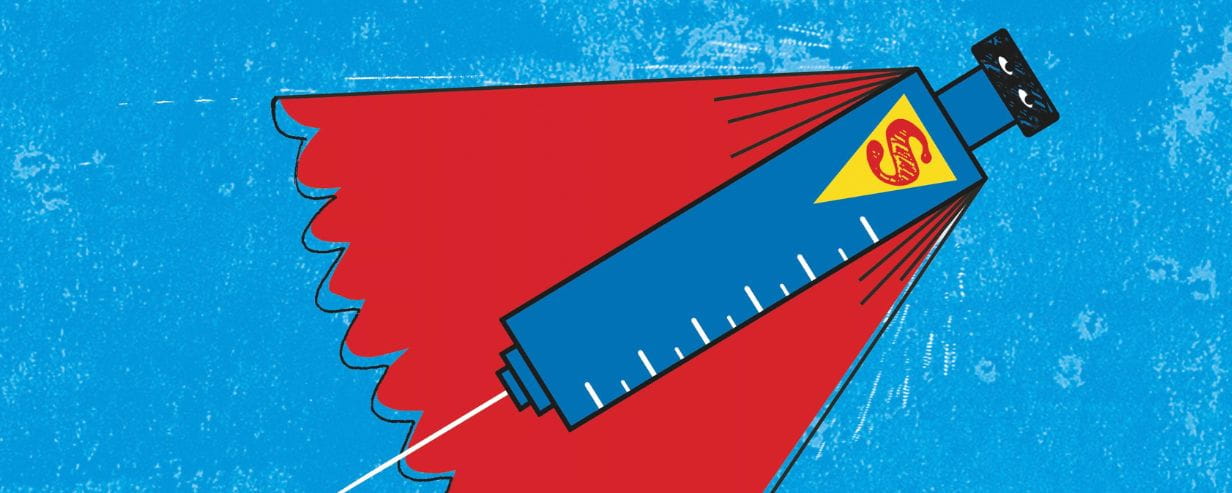
When yet another vaccine invitation lands on our mat or our phone, it may be tempting to ignore it.
But evidence is mounting that vaccines may do far more than protect us against specific infections. They may also lower the risk of some of our most feared conditions: dementia, heart attacks and strokes.
Recent research even suggests they could help slow aspects of biological ageing.
Some of the most compelling evidence came from researchers in Italy, who found that shingles vaccination was linked to a 47% lower risk of Alzheimer’s disease and a 24% lower risk of overall dementia. They drew on 21 studies with more than 104 million participants.
Another study, published in the journal Nature, mined the health records of 280,000 older adults in Wales and tracked them over seven years. Those who received the shingles jab were 20% less likely to develop mild cognitive impairment (MCI), a potential forerunner of dementia. Meanwhile, among participants already diagnosed with dementia, vaccination was linked to a lower risk of dying from the disease.
What makes this research especially persuasive is a quirk of Welsh public health policy. Only those born on or after 2 September 1933 were eligible for the vaccine. Those born just days earlier were not. That effectively created two virtually identical groups, differing in one vital respect: whether they’d had the jab.
Flu vaccination has also been linked to a 13% reduction in dementia risk. And pneumococcal vaccination is associated with a 36% lower risk of Alzheimer’s, and against Tetanus-Diphtheria-Whooping cough with a 33% lower overall dementia risk.
The potential benefits extend beyond the brain. Two large studies have shown shingles vaccination is linked to a lower risk of heart attack and stroke. The latest, from the US this summer, showed that those given Shingrix were 12% less likely to have a cardiovascular diagnosis within 3.5 years.
A global review presented at the European Society of Cardiology Annual Conference in 2025 found that shingles vaccination was linked to a 16-18% lower risk of heart attack and stroke.
Possibly. Recent US research suggested that shingles vaccination in the over-70s was associated with changes in the markers of biological ageing. The study looked at the data of 3,800 Americans over 70 and compared those who’d had the vaccine with those who hadn’t. Those who’d received a shingles vaccine had lower levels of chronic inflammation and slower changes in gene activity linked to ageing.
Chronic inflammation in the body is increasingly linked to all kinds of diseases, including cancer, dementia and arthritis.
Scientists have a number of theories:
At one level, vaccines are simply doing what they say on the vial: preventing infection, reducing severity or lowering the amount of virus in the body. This matters more as we age. Illnesses we once shrugged off can hit harder in later life – especially respiratory diseases like RSV (respiratory syncytial virus) and flu.
“Infections are more than just a short-term nuisance,” explains John Tregoning, professor of vaccine immunology at Imperial College London.
“A respiratory infection such as flu or RSV makes your heart work harder to pump blood through the lungs and deliver oxygen. That strain can damage heart muscle, leaving you more vulnerable to heart attack and stroke.”
Avoiding hospital admission may be an important factor. “Many of us know someone who was fine before they went into hospital but went rapidly downhill from then on,” says Professor Tregoning, who also wrote Live Forever? A Curious Scientist’s Guide to Wellness, Ageing and Death.
Together, flu and RSV are responsible for a tidal wave of hospital admissions each year. “Avoiding this by getting vaccinated can extend the time you stay healthy and independent for longer.”
Ruth Itzhaki, emeritus professor at the University of Manchester, was one of the first to pinpoint a link between shingles vaccination and protection against dementia in 2021. The virus that causes shingles, varicella zoster virus (VZV), is related to the one that causes cold sores, herpes simplex virus type 1 (HSV-1).
“Herpes viruses can remain dormant in the body for years, including in the brain,” Professor Itzhaki explains. “Problems arise when they are repeatedly reactivated. Each time this happens it may cause small amounts of brain damage, which, over a lifetime, can accumulate.”
These repeated assaults on the brain appear especially harmful in people who have inherited APOE e4, a high-risk genetic variant linked to Alzheimer’s disease.
“Shingles vaccination may reduce immune stress and the number of times HSV-1 is reactivated, lowering cumulative brain damage,” says Professor Itzhaki.
Then there are the broader effects of vaccination on the immune system. Professor Paul Klenerman, from the Nuffield Department of Medicine at the University of Oxford, points out that vaccines do more than stimulate antibodies against a specific virus.
“They also activate the innate immune system, the body’s first line of defence,” he says. “We used to think this part of the immune system had no memory, but we now know it can be ‘trained’, leading to longer-lasting benefits.”
This effect on the immune system may help explain the recent US research suggesting that shingles vaccination in the over-70s was associated with changes in the markers of biological ageing. Immune function and chronic inflammation in the body is increasingly linked to all kinds of diseases associated with ageing, including cancer, dementia and arthritis.
Another part of the jigsaw might be adjuvants, the ingredients added to vaccines to boost immune response. Both Zostavax and the newer shingles vaccine Shingrix have been linked with protection against dementia. Shingrix, however, appears to offer stronger protection than its predecessor.
One leading theory is that this is down to the adjuvant AS01 which Shingrix contains (and Zostavax doesn’t). AS01 is also used in the RSV vaccine Arexvy, used in the US and available privately in the UK. However, Abrysvo, the RSV vaccine used on the NHS, does not contain AS01.
A US study analysing records from more than 430,000 people found that Arexvy was linked to a 29% lower risk of dementia in the 18 months following vaccination. Intriguingly, standard flu vaccines, which don’t contain AS01, didn’t show this association.
Exactly how AS01 might influence brain health is not yet clear. But research suggests that it may help to combat the decline in our response to vaccines associated with chronic inflammation as we get older (inflammageing) as well as ageing of the immune system. Some of its components have been shown to reduce the amyloid plaques in the brain that are hallmarks of Alzheimer’s, although this has only been observed in research on mice.
So far, most studies have been observational, where researchers watch a particular group of people in order to tease out links between two factors – in this case vaccines and later life diseases – so it can’t prove cause and effect. Even so, it’s hard to ignore the data so far. As Professor Tregoning points out: “The connection is strong. We just don’t have the exact mechanism yet.”
Despite this, some people are still reluctant to take up vaccinations, according to official figures (one study found that those aged 74 years or older were more likely to be against vaccines in general compared with 18-24-year-olds – 12% vs 2.5%). Lack of awareness, time pressure, fear of side effects, mistrust of medics, and/or the perception that you’re not put at risk by diseases like RSV or flu may all play an important part in so-called “vaccine hesitancy”.
Unsurprisingly, every single one of our experts recommends getting vaccinated. As Professor Tregoning puts it: “You can spend a lot of money and effort on things that have very little effect or you can get a free vaccine at your GP that has a massive effect.”
It’s complicated. The vaccines currently offered in this country (Pfizer and Moderna) are mRNA vaccines and don’t contain AS01, the leading candidate in dementia protection.
That said, Covid itself could increase the risk of cognitive impairment, according to research published last year showing that people who’d previously had Covid were likely to have increased levels of blood markers linked to the amyloid plaques that are a hallmark of Alzheimer’s. Indeed, according to earlier research, over-65s face an almost 70% increased risk of being diagnosed with Alzheimer’s within a year of catching Covid.
From age 65
From age 75
Read our winter vaccination guide for more detail about what's available and when to book.
Buy direct and start a new Saga Health Insurance policy by the end of 10 December 2026 to get your first 3 months free. T&Cs apply.
Underwritten by Bupa Insurance Limited.
Trusted advice, practical tips, exclusive interviews, puzzles, competitions and more every week. Sign up to our free newsletter.
Your chance to win cruise for two to Cádiz, Casablanca and the Canary Islands, worth more than £9,600.
Are you retiring at the wrong age? The best age to retire for your body, brain, happiness and pocket.
Everything you need to know about the lung infection, and how you could be ill with “walking” pneumonia without realising it.
Strong calves for a strong mind: how they support our circulation and brain health, with easy moves to strengthen yours at home.
Our GP Dr Mark Porter explains what can cause itchy skin, which is a common problem as we get older.
Worried you’ve morphed into Victor Meldrew? Find out how to battle that bad mood, and what to do if you’re stuck with a grouchy loved one.
The benefits of heat and cold therapy, and how Nordic bathing won over our nervous writer.
Here’s how to spot the symptoms of heat disease and reduce your danger.
Everything you’re entitled to this year, when you can have it, and the gaps that remain.
Pilates for back pain – what to do if you are suffering, and five gentle exercises that could help.
Dizziness or vertigo: a sensation of spinning, can stop us doing everyday things for fear of falling. Try these tips to stop feeling dizzy
You don’t have to put up with bladder leaks. We try out the latest pelvic floor gadgets for men and women.
Cataracts are a normal part of ageing. Learn how to spot the signs – and when it’s time to consider surgery.