How to take better photos of your pet: 10 expert tips
Most of us have hundreds of pictures of our pets but very few great ones. These simple tricks will help you capture them at their very best.
Your camera roll can reveal a lot about you. A recent poll of 2,000 pet owners found that they had more pictures of their cat or dog on their phone than they did of their partner, friends or relatives.
But for most of us the majority of those images aren’t as good as we’d hoped they would be. We all want to capture those precious moments, our pet’s unique character or images of us with them. But when we look at the results they haven’t quite worked out.
To find out how to take better pictures, we spoke to professional pet photographers who deal with these challenges every day, to find out their best tricks and tips.
One challenge is that animals are unpredictable. “You have to be prepared for the unexpected,” says pet photographer Kerry Jordan. “When I was shooting a dog for a treat company, the dog ran off with the treats! At least I got a great photo of it.”
That is part of the joy of pet photography. You can plan the shot, but your pet gets the final say. “Taking portraits is much easier if you can make it fun for your pet,” says Kerry.
Here’s how to get sharper, warmer, funnier and more frame-worthy photos of your cat or dog with tips from the experts.
Micro-moments, when your pet lifts their ears, tilts their head or looks straight down the lens, often make great shots.
To get your dog’s attention, make a strange sound. “Roll your tongue, make a cat noise or use a duck call,” says Kerry. “Unusual sounds make dogs alert and think, ‘What’s that noise? Where’s it coming from?’”
“Cats can be trickier,” says pet photographer Heather Woodward. “They tend to pay attention to moving things.” Try holding a teaser toy just above the lens. If your pet is motivated by toys, hide their favourite for a couple of days, so it feels exciting again.
“The most compelling images pull you into your animal’s world,” says Heather. “For dogs and cats, shooting at their level or just below creates maximum impact.”
For Heather that has sometimes meant lying on the ground or being in a ditch, but if you don’t want to get that muddy, you can just sit on a chair.
“Turning your phone upside down also means the lens is a bit closer to the ground,” adds Kerry.
You could also go high. If your dog is sprawled on the bed or your cat is curled on the sofa, shoot from above. A change of angle can make the photo feel much more intimate.
“The location, inside or out, can make or break your image,” says Heather.
Before you press the shutter, check the whole view. Look for computer leads, a bright bin in the background or stray leaves on the ground. Clear away what you can, move slightly to the side, switch angles or crop in tighter, if you need to.
If there are still distractions behind your pet, blur the background. On a phone, try portrait mode. If you’re using a camera, increase the distance between them and whatever is behind them and zoom in. Focus on the eyes.
It’s also worth thinking about where your pet sits in the frame. “Using the grid lines on your camera, put the main focus of your image on a grid line or where two lines cross rather than directly in the centre,” says Kerry.
Your pet doesn’t always need to fill the picture: a small dog in a wide landscape, perhaps in the bottom right-hand side, can be really striking. Your eye will still be drawn to it.
“If you’re the lucky guardian of an all-black, all-white or spotted dog or cat, you can put them against any background and it will work like a dream,” says Heather.
Ginger, red and sandy pets need more thought. You don’t want your Golden Retriever swallowed up by the landscape if they’re on a sandy beach.
“Decide if you want the background to match the tones of your pet or would prefer a contrast,” says Heather. “You could use a colour wheel to help you pick the scene or guide you in retouching the picture afterwards.”
“For some animals, the camera click can be a bit off-putting, if not scary,” says Heather. “This will show in your images or prevent you from getting any.”
Put your phone on silent or switch to silent shutter, if your camera allows it. This is especially useful for anxious or older pets.
If you can’t silence the click, turn it into a positive sound. “As you click, throw a treat towards your pet,” says Heather.
Repeat this until your pet ignores the click or starts to look for the treat when they hear it.
“Get curious about light as it can make all the difference,” says Kerry.
Bright sunshine can make colours look over-saturated and mean your pet has to squint. On a very sunny day, find shade. “Ask your pet to sit or stand by the edge of the shade so that the light reflects up from the ground or the sky,” she says.
Often, early morning and late afternoon are the best times to shoot, says Heather, as the light will be lower, softer and warmer: “Aim for the hour or so immediately after sunrise or just before sunset.”
If you’re inside, use natural light. “Window light can look lovely and soft as long as the sun isn’t streaming through,” says Kerry. Position your pet facing or side on to the window, a short distance away, so the light falls gently across them.
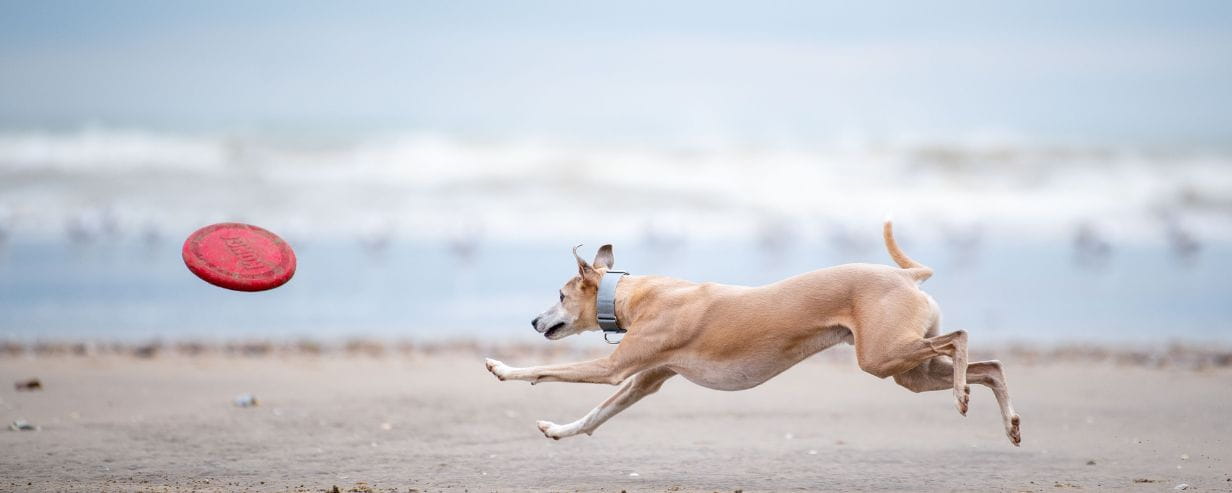
Try panning, says Kerry. This involves tracking your pet with your camera as they run past you.
“If you have someone to help you, ask them to throw something your pet will like, such as a toy or a treat, wherever you’d like your pet to go. Follow your pet from the start point, pressing the shutter several times as they come in front of you.” If you’re using a phone, try burst mode.
It’s easier to get a horizontal action shot than one where your pet is running straight towards you as you’ll have a bigger surface area to focus on.
“Remember your photo doesn’t have to be a full-on portrait,” says Kerry. “I’ve taken some lovely photos of my whippets’ paws sticking out of their bed.”
Aim for photos that create a memory of what your pet does, not just what they look like. That might be a dog’s muddy paws after a walk or a cat watching birds through the window.
Think about why you’re taking that particular photo, says Kerry. “Take photographs of your pet while they’re relaxed and just being a cat or a dog.”
The best pictures often show traits that make them who they are.
Pet portraits don’t have to be all whiskers, paws and wet noses. Sometimes the best way to show who your animal is can be to show who they love.
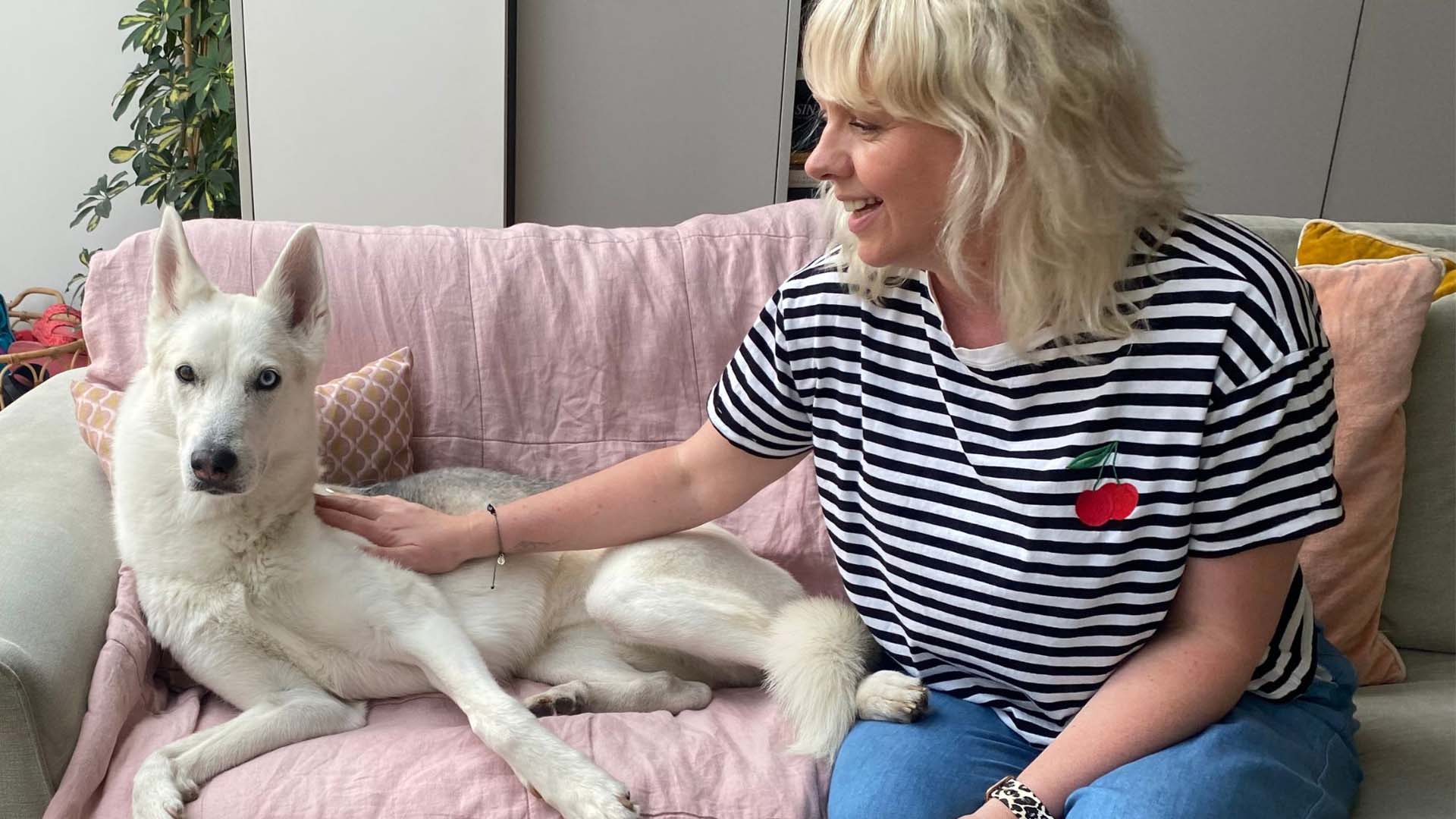
“Pet-and-their-owner shots are one of my favourites,” says pet photographer Chohee Courtois. “The bond you can show in these images is so heartwarming; it can really stop the viewer.”
If you really hate being photographed? “Just include a body part, such as your eyes, your legs or your hands,” says Chohee.
You can get in the frame by setting your camera on a timer and propping it up against a bag, suggests Kerry. Or you could get a GorillaPod, which fixes to your phone and wraps around a lamppost or a branch.
You can also get Bluetooth devices that connect to your phone so you can get yourself into position and then ask your phone to take the photo.
“I always try to be as calm and patient as possible during pet portrait sessions,” says Chohee.
Your pet can read the room. If you’re tense, impatient or muttering because they won’t sit still, they’ll know and get anxious. “Pets are really sensitive to our emotions: they often absorb our energy and behave accordingly,” she says.
It’s worth remembering that your dog or cat is not a professional model. “Try not to show your frustration because they’re not sitting long enough or because they don’t look at the camera. They are animals – it’s normal.”
Take the pressure off by letting them wander around or sniff the ground.
Laura Silverman is a freelance journalist. She has chased news leads for the Sun, written arts reviews for The Times, interviewed politicians for Country Living and edited features for the Telegraph. She has also written books about wild swimming and Mary Shelley.
View author page
Your chance to win a 7-night cruise for two on board Spirit of the Rhine, worth more than £4,000.
Whether you're looking for straightforward insurance or cover that's packed with extras, our home insurance has plenty of options for people over 50.
While iPhones for pooches are a way off, there’s plenty of dog tech you can still invest in.
Expert advice on how to solve common issues that can spoil your dog walks - and it only takes a few minutes.