The surprising health benefits of reading
Getting lost in a good book is one of life’s pleasures, but it could be doing more for your health and wellbeing than you realise.
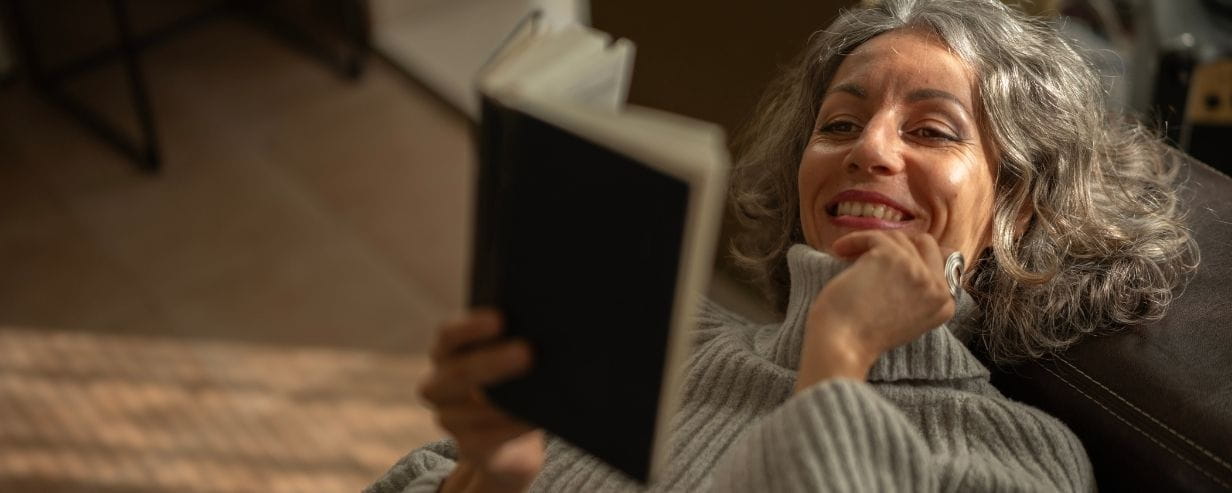
Getty
Getting lost in a good book is one of life’s pleasures, but it could be doing more for your health and wellbeing than you realise.
Most of us know the pleasure of curling up with a good book, losing track of time and emerging an hour later wondering where the afternoon went. But reading could also be a workout for the mind, easing stress and helping us feel more connected to others. And unlike the gym, you can do it in your slippers.
While picking up a book won’t guarantee protection against dementia or bring about instant happiness, research suggests there are compelling reasons to make more room for it in our lives, and they go well beyond finding out “whodunnit”.
Boost your mental health and wellbeing by reading for pleasure or doing any activity you enjoy. These are the hobbies that can help you stay healthy in later life.
Reading a good book is an easy way to entertain ourselves, but it can also benefit our brains.
A 2021 study followed 1,962 adults aged 64 and above for 14 years and found that those who read at least once a week were less likely to experience cognitive decline than those who read less often.
A larger study, published in 2023, followed 10,318 older adults for around a decade. It found that people who more frequently took part in passive mental activities, including reading books, newspapers and magazines, had a 7% lower risk of developing dementia.
So why might reading help? Experts think part of the answer lies in something called cognitive reserve. This is the brain’s ability to keep functioning well, even as it undergoes age-related changes or damage. Keeping our minds busy may help build this reserve, so symptoms of dementia appear later.
It also seems that what we do in later life counts. In one US study of almost 2,000 people with an average age of 80, those who regularly read and did other mentally stimulating activities were diagnosed with Alzheimer’s around five years later, on average, than the least active. Crucially, the activities people did in later life made the difference, not their education or how mentally active they’d been when they were younger.
None of these studies proves that reading itself prevents dementia, as they show links rather than cause and effect. But together they add to the evidence that staying mentally active as we age is worthwhile.
Paul Edwards, chief nursing officer at Dementia UK, agrees. “Reading is an important way of keeping our minds active and cognitively stimulated,” he says. “It can introduce us to new ideas and knowledge, provide enjoyment and relaxation, and create opportunities for conversation and social connection, which can help reduce the risk of developing dementia.
“It’s never too late to start reading, and while there is no cure for dementia, reading, either alone or with someone else, can provide valuable mental stimulation,” he adds.

There’s something rather lovely about being so absorbed in a book that you forget about the washing, the emails and whatever else you were supposed to be doing. That ability to step away from everyday life may be one of reading’s biggest benefits.
A 2025 review of research on reading for pleasure found it could support wellbeing in several ways, from helping us relax and feel more positive to helping us better understand ourselves and others.
Jo Coldwell, manager at Red Lion Books in Colchester, says that most of her customers over 50 are lifelong readers who have spent years “dreaming, waiting and hoping” for the stage of life when they can give reading more time. And for her, books offer far more than a pastime.
“Reading isn’t just a hobby,” she says. “It’s a way of feeling into another life. It expands our world and provides empathy.”
Sometimes, it’s comforting to recognise something of ourselves in a character. At other times, it’s refreshing to spend a few hours somewhere entirely different.
And you don’t have to stick to uplifting stories to feel the benefit. A gripping thriller or a thought-provoking novel can be just as engrossing as a gentle feel-good read. Coldwell finds that the people she meets read to switch off, not just to relax, and they don't necessarily choose easy books.
“They are reading books to help them escape a little bit or to activate a different bit of their brain,” she says.
In fact, she’s noticed older readers are often less squeamish about difficult subject matter than younger ones.

Reading might seem like a solitary pastime, but books have a knack for bringing people together. And there’s evidence it matters. A 2025 systematic review of 11 studies involving adults aged 60 and over found that shared-reading activities were linked to better wellbeing and social engagement, as well as less loneliness and fewer symptoms of depression.
Coldwell sees this first-hand. She founded Appetite Book Club in 2007, which now has around 150 members, and says that many of the older members particularly value the chance to chat, especially those who live alone.
“Joining a book club is very sociable, but being in a bookshop also works!” she says. “Customers are always recommending books to each other.”
Red Lion Books has also started holding informal Saturday-morning gatherings, where customers turn up at 11 am with a mug for the team to fill with coffee and chat about books. They attract all ages, including a couple in their twenties who moved to Colchester without knowing anyone. The sessions have given them something to look forward to each week, as well as a way to meet people.
Joining a book club won’t cure loneliness on its own, but it can give you a reason to get out, meet people and build connections around something you enjoy. Your local library is a good place to start, as many run their own reading groups.
Join Clare Balding in conversation for Saga’s first Book Club. Book your free place now and join us online on Thursday 19 November at 6.30pm.
Reading can remain a source of connection even when circumstances change. Edwards points out that dementia can make reading harder, particularly if someone has trouble concentrating, following a plot, interpreting visual information or seeing clearly.
“However, dementia does not have to mean losing the pleasure of books,” he says. “Short stories, poems, picture books, audiobooks or reading together can help people continue to enjoy reading, evoke memories and maintain a sense of connection with others.”




Buy direct and start a new Saga Health Insurance policy by the end of 10 December 2026 to get your first 3 months free. T&Cs apply.
Underwritten by Bupa Insurance Limited.

Find out about special interest holidays here...
On Saga’s archaeology holidays, you'll explore artefacts from early European civilisations as expert hosts share stories of famous archaeological sites – along with a few hidden gems.

Are you retiring at the wrong age? The best age to retire for your body, brain, happiness and pocket.


Everything you need to know about the lung infection, and how you could be ill with “walking” pneumonia without realising it.

Strong calves for a strong mind: how they support our circulation and brain health, with easy moves to strengthen yours at home.


Our GP Dr Mark Porter explains what can cause itchy skin, which is a common problem as we get older.

Worried you’ve morphed into Victor Meldrew? Find out how to battle that bad mood, and what to do if you’re stuck with a grouchy loved one.

The benefits of heat and cold therapy, and how Nordic bathing won over our nervous writer.

From breathlessness to swollen ankles, a cardiologist explains the warning signs to look out for.


Everything you’re entitled to this year, when you can have it, and the gaps that remain.

Pilates for back pain – what to do if you are suffering, and five gentle exercises that could help.

Dizziness or vertigo: a sensation of spinning, can stop us doing everyday things for fear of falling. Try these tips to stop feeling dizzy


You don’t have to put up with bladder leaks. We try out the latest pelvic floor gadgets for men and women.

Learn how to spot cataract warnings – and when it’s time to consider surgery.