How often should I wash my towels and 10 more household dilemmas answered
Whether it's how often you should change your sheets, clean your floor or wash your hair, the experts answer our most common household dilemmas.
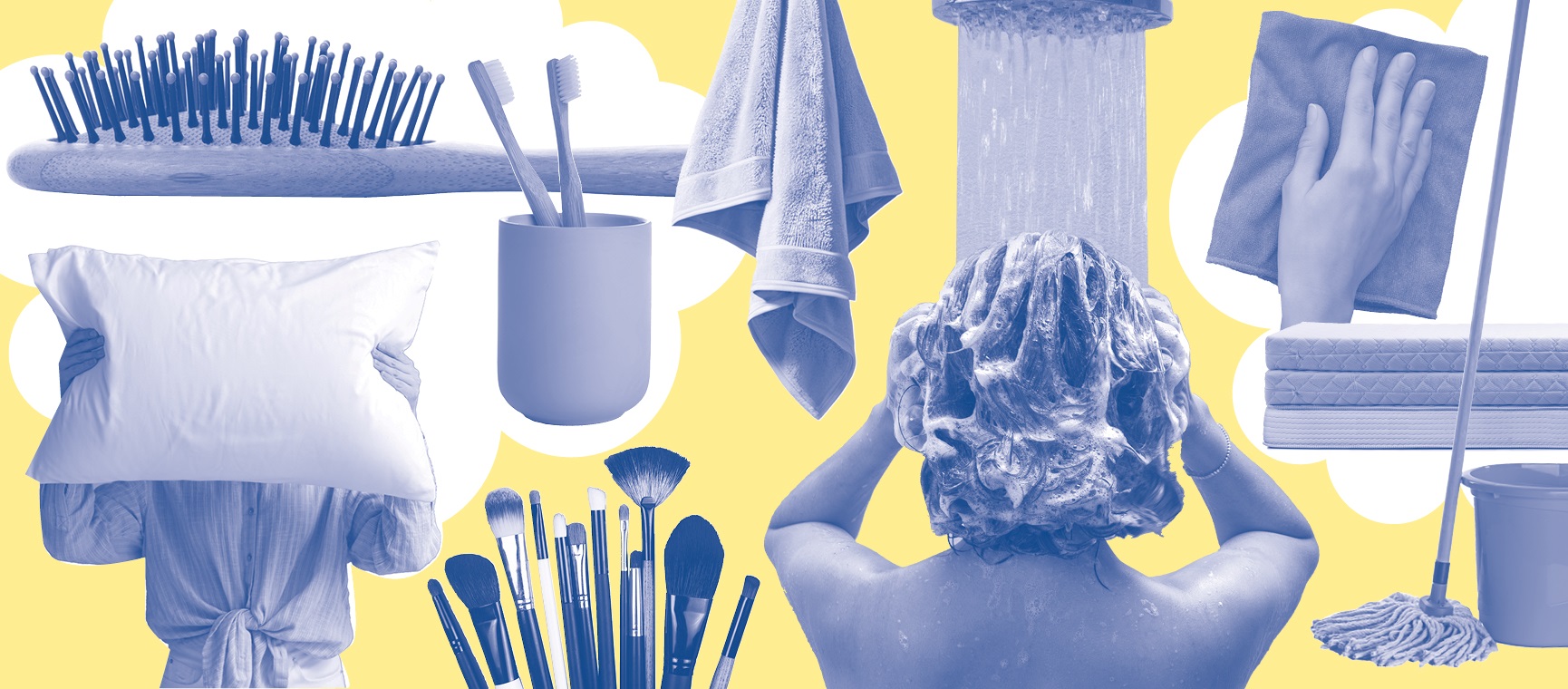
Household dilemmas have become a sign of the times. How often should we change our sheets? When should we change our mattress? Will hanging a dishcloth to dry over a tap keep it germ-free?
They can often become bones of contention within a household, so we turned to the experts to give their view on ten common household dilemmas.
The average hairbrush contains 3,500 colonies of bacteria per square inch, according to the University of Arizona, which is why clinical trichologist Kate Holden advises cleaning it once a week.
"Over time, your brush collects bacteria, yeast and fungi, along with product build-up, dead skin cells, and natural oils from your scalp," she says.
"Every time you run a dirty brush through your hair, you’re reintroducing contaminants to clean strands and scalp. This can lead to irritation, itching, greasy roots, and dull-looking hair.
"If you’re dealing with a scalp issue like dandruff, using a dirty brush can make it even worse."
Holden recommends dislodging hairs from your brush with a comb, then washing in mild shampoo and leaving to air dry, bristles facing down on a towel.
Popping pillowcases in the wash once a week is sufficient, says chartered environmental health practitioner Dr Lisa Ackerley.
"Obviously if you’ve been ill, sweat a lot, or have runny eyes, you may want to wash them every day. Otherwise, launder weekly at 60°C to kill any bacteria and use washing powder not liquid, as it contains enzymes and forms of bleach that make it antibacterial.
"If you’re worried about energy costs or have silk pillowcases that need lower temperatures, add laundry sanitiser to keep germs at bay."
While one in ten people admitted to washing their bath towels just twice a year in a survey, Dr Ackerley suggests once or twice a week.
"Put them on a high-temperature cycle of at least 60ºC. At lower temperatures, bacteria remains and you may wipe germs from your bottom on to your face," she says.
Hot washes are a must when you consider towels are a breeding round for bacteria, which builds up to alarming levels in five days, according to a study. Therefore, the average tea towel should be washed every day at 60ºC, says Dr Ackerley.
"Drying laundry quickly is also important as bacteria don’t like dry conditions, so don’t let it fester in the machine after washing."
"In terms of health risk, the kitchen floor is probably one of the least hazardous areas of the home, because there’s little chance of germs spreading from the floor to your food," says Dr Ackerley.
"For this reason, you only need to mop it once a week."
Have pets, or grandchildren visiting? She advises cleaning it more frequently.
Using the five-second rule (food that’s fallen on the floor is still good to eat if it has been there for less than five seconds) isn’t advisable either, as bacteria transferring to the food happens the moment it touches the floor, according to a study by the University of Alabama at Birmingham.
A study by the Society for Applied Microbiology found that 93% of beauty blenders hadn’t been cleaned and 90% were contaminated with bacteria.
Consultant dermatologist Dr Zainab Laftah, from the British Skin Foundation, advises washing brushes used for dry powder once a week, blenders for wet products every three days.
"Bacteria and fungus thrive in damp conditions, so liquid foundation sponges will accumulate germs faster than powder brushes," she explains.
"Dirty applicators can cause acne breakouts, and bacterial and fungal infections like seborrhoeic dermatitis (flaky, spotty skin)."
She advises you wash them with baby shampoo and lukewarm water (so as not to damage bristles), then air dry.
Bras are the hard-working heroes of women’s wardrobes, but most of us are wearing them way past their shelf life. The average British woman wears bras that are over four years old, which can be bad for our posture, says stylist and fashion director Amanda Marcantonio.
"As a general rule, buy a new bra every nine to 12 months," she says. "Elastic fibres in the band and straps begin to perish after a year. The band is responsible for about 80% of the bra’s support, so with wear and tear it can become stretched, which can lead to neck and back pain.
"When you buy a bra, it should fit perfectly on the loosest hook, the idea being that as it gets slacker with wear, you can tighten it by going to the next hook. When it is on the tightest hook, you should go bra shopping."
"Giving your kitchen cloth a quick rinse then hanging it over a tap – or worse, leaving it in a scrunched-up ball – is very unhygienic, apparently.
"We should be giving them a deep clean on a daily basis because they’re germ motorways, potentially transferring contaminants like E. coli all over your worktops," says Dr Ackerley.
"Sponges and brushes can be popped in the dishwasher; cleaning cloths can be boiled in a pan with bio washing powder."
A study by the American Society for Microbiology found that washing cleaning cloths at temperatures of 40-60°C was the most important factor in killing the pathogens harboured within. The study also found that exposure to the UV rays of sunlight when line-drying reduced the number of fungi.
Fans of a weekly wash and blow-dry may be surprised that the sweet spot for washing your hair is every day. In a meta-analysis study by scientists from the University of Miami and the University of Minnesota, participants who washed their hair five or six times a week had the highest levels of hair and scalp health.
The scalp is an extension of facial skin, which is generally washed daily, pointed out the scientists. They noted that decreased wash frequency led to longer accumulation times for sebum on the scalp, which can cause oxidative damage, leading to itchiness and a decrease in new hair growth.
"It’s a common myth that the scalp can clean itself if left unwashed, but this isn’t true," says Kate Holden.
"The scalp contains sebaceous glands that produce oil, and it’s exposed to daily dirt, sweat, environmental pollutants and haircare products. If these aren’t regularly washed away, a build up can affect scalp and hair health."
Toothbrushes lose efficacy when their bristles splay, usually around the three-month mark, says dentist Paul Woodhouse from the British Dental Association.
"You need stiff bristles to move the sludge-like plaque bacteria from teeth," he says. "With use, bristles splay and won’t do the job. If you put too much pressure on while brushing, that wears out brushes faster.
"I’d also recommend a new toothbrush after a period of illness as it will get heavily infected with nasties." And should we regularly clean our toothbrush? "I rinse mine and store it upright in the sunlight so it dries quickly. Bacteria don’t survive well in dry environments," he says.
Buying a bed is a big investment, but it’s money well spent when you consider that we produce half a pint of sweat a night while sleeping, and the average mattress can harbour between 100,000 and 10 million dust mites, says the National Bed Federation (NBF).
Tristine Hargreaves, executive director of NBF, recommends purchasing a new mattress every seven to ten years. The lifespan of memory foam types can be even shorter.
"Signs that you need a new one include sagging and lumpiness, rolling into the middle of the bed at night, and waking up with aches and pains," she says. "Mattress protectors can extend the life of a mattress and minimise mites."
Be the first to know when your dogs and cats can join the Saga family too.
This year, Saga is celebrating an incredible 75 years – and we’d love you to be part of the celebrations. For a limited time only, you can subscribe to Saga Magazine for just 75p an issue.
Receive the next 6 print editions delivered direct to your door, plus 6 months’ unlimited access to the Saga Magazine app – perfect for reading on the go.
From rice to roast chicken, there’s a lot of confusing advice about leftover food. We ask the experts to separate fact from fiction.
Want to make the perfect brew? Then follow these expert tips
We’ve found the best money-saving alternatives to some of the most popular branded products.
We've got expert advice on how to cook up a feast in your air fryer in minutes.
These foods will lose flavour and freshness if you store them in the fridge.